
Learning centre
Plain-English guides to choosing, using and calibrating test instruments, written for UK technicians, farmers, home mechanics and labs. Selection guides explain what to look for; how-to articles cover setup, calibration and troubleshooting.

Guide
What Moisture Content Should Firewood Be?
Short answer: Firewood should be at 20 % moisture content or lower before you burn it. In England, wood sold in small quantities must meet that limit by law. Why does moisture content matter? Freshly felled timber can...
Guide
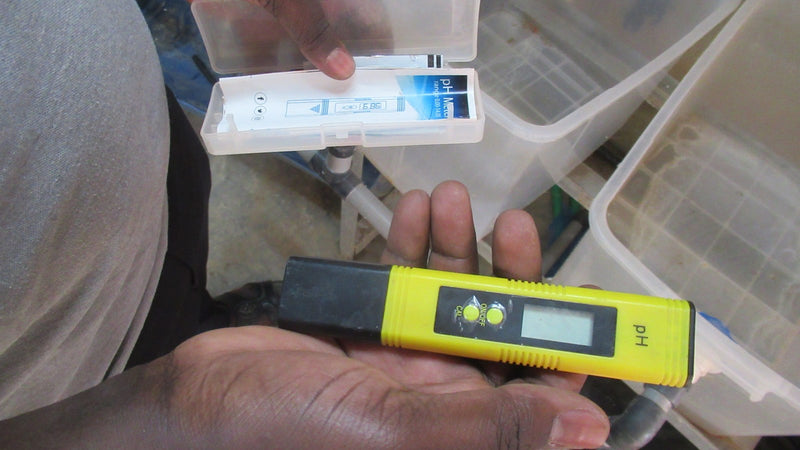
pH meter calibration guide
Calibrate a pH pen with fresh pH 7.00 buffer first, then pH 4.00 (or 10.01 for alkaline samples), rinse with distilled water between buffers, and store the electrode moist in storage solution — never in distilled wate...
Guide
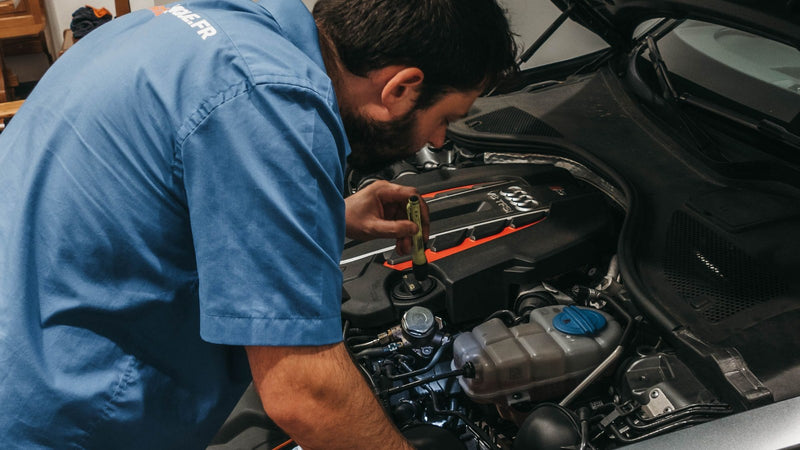
OBD2 vs EOBD: what is the difference?
EOBD is the European version of OBD2.

Guide
Multimeter vs Clamp Meter: What Each One Measures
Short answer: A multimeter is best for voltage, resistance, continuity and small currents, measured through its test leads. A clamp meter measures larger AC (and sometimes DC) currents by closing its jaws around a sin...

Guide
How to Use a Soil pH Meter
Short answer: Take readings from several spots in moist, settled soil (at least three months after liming or feeding), clean the probe between each one, and average the results. Most garden plants do best at around pH...

Guide
How to Choose Lab Equipment: Vacuum Pumps, Gas Regulators and Spectrophotometers
Choose a lab vacuum pump by required vacuum level, flow rate and chemical resistance; a gas regulator by gas type, cylinder connection and outlet flow range; and a spectrophotometer by wavelength range, bandwidth and ...
Guide
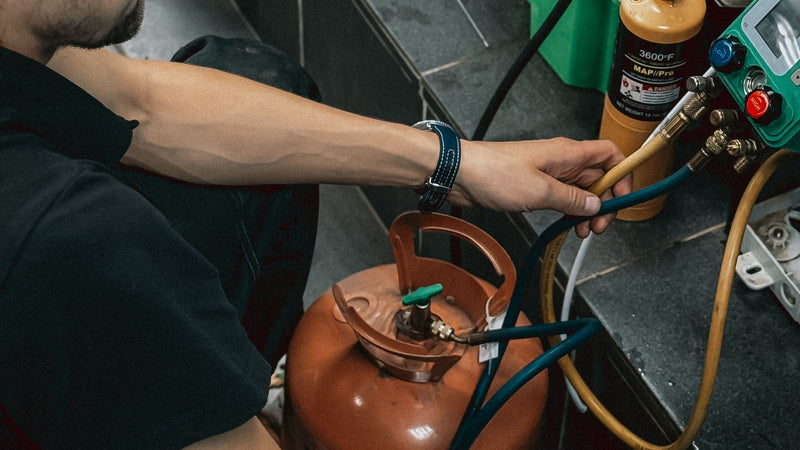
How to Choose HVAC and Refrigeration Tools: Gauges, Vacuum Pumps, Flaring Tools and Leak Detectors
Choose HVAC tools that match the refrigerants and pipe sizes you work with — gauges or digital manifolds rated for those refrigerants' pressures, a vacuum pump sized for the system, a flaring tool for the flare standa...

Guide
How to Choose an OBD2 Scanner and Car Diagnostic Tools
Pick an OBD2 scanner by coverage — a basic code reader for engine and emissions faults, or an all-system scanner if you need ABS, airbag, transmission and service functions — then check vehicle compatibility, live dat...

Guide
How to Choose an Inspection Camera or Borescope
Choose an inspection camera by the smallest opening it must pass through (probe diameter), whether you need to steer the tip (articulation), the working distance you will view at (focus range), and the environment (IP...

Guide
How to Choose an Industrial Scale: Crane, Platform and Lab Balances
Choose a scale by maximum capacity, readability (the smallest increment it displays), the way the load is applied (hanging, platform or pan) and the environment; if weights are used to set prices or charges, it must b...

Guide
How to Choose an Electric Fence Energiser and Farm Monitoring Cameras
Choose an energiser by the length and type of fence, the animals you keep and the vegetation load, then by power source (mains, battery or solar) and output energy; choose trail or time-lapse cameras by trigger speed,...

Guide
How to Choose a Water Quality Tester: pH, TDS, EC and Multi-Parameter
Short answer: choose a water quality tester by the parameter you actually need — pH for acidity, EC or TDS for dissolved salts, or a multi-parameter meter for several at once — then look at resolution, automatic tempe...

Guide
How to Choose a Temperature Data Logger or Thermal Camera
Short answer: choose a contact sensor or data logger when you need a documented temperature record over time, and a thermal imaging camera when you need to see surface temperature differences across an area; then matc...

Guide
How to Choose a Soil Tester and Smart Irrigation Controller
Short answer: use a soil moisture meter or sensor to decide when to water, a soil pH meter to check whether your soil suits what you grow, and a laboratory soil analysis when you need reliable nutrient figures; add a ...

Guide
How to Choose a Multimeter or Electrical Tester
Short answer: choose an electrical tester by the job first (fault-finding, current measurement, proving dead or insulation testing), then by its measurement category (CAT) rating for where it will be used, its true-RM...

Guide
How to Choose a Moisture Meter or Refractometer for Grain, Hay, Wood and Brix
Short answer: choose a moisture meter calibrated for the material you test — grain, hay or wood — because each needs its own scale; choose a refractometer with the right Brix range and automatic temperature compensati...

Guide
How to Choose a Laser Level, Laser Distance Meter, Caliper or Thickness Gauge
Short answer: choose a laser level by the number and colour of lines, self-levelling range and working distance; a laser distance meter by range and accuracy; and calipers or thickness gauges by resolution, measuring ...

Guide
How to Choose a Gas Detector or Environmental Meter
Short answer: choose a gas or environmental meter by the hazard you need to measure — specific gases, oxygen level, particulates, noise, electromagnetic fields or airflow — then by sensor technology, alarm thresholds,...

Guide
How to Calibrate a Refractometer
Short answer: Put a few drops of distilled water at room temperature on the prism, then turn the adjustment screw until the boundary line sits exactly on zero. For full confidence, check the reading against a known su...

Guide
How to Bump Test a Gas Detector
Short answer: A bump test briefly exposes the detector to a known test gas to prove the sensors respond and the alarms go off. Carry one out before each day's use, and if it fails, do not use the detector until it has...

Guide
How Thermal Imaging Cameras Work
A thermal camera does not see light.
Guide
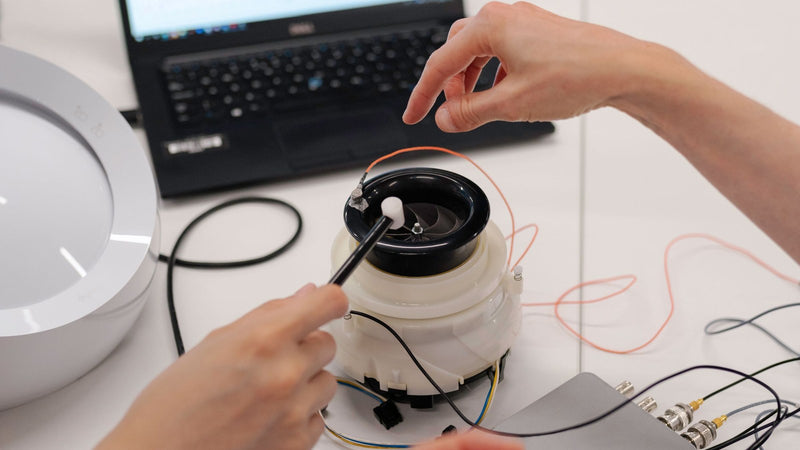
Calibration and Accuracy Basics for Test and Measuring Instruments
Short answer: calibration compares an instrument against a reference of known, traceable value and records the difference and its uncertainty; accuracy is how close a reading is to the true value, resolution is the sm...