
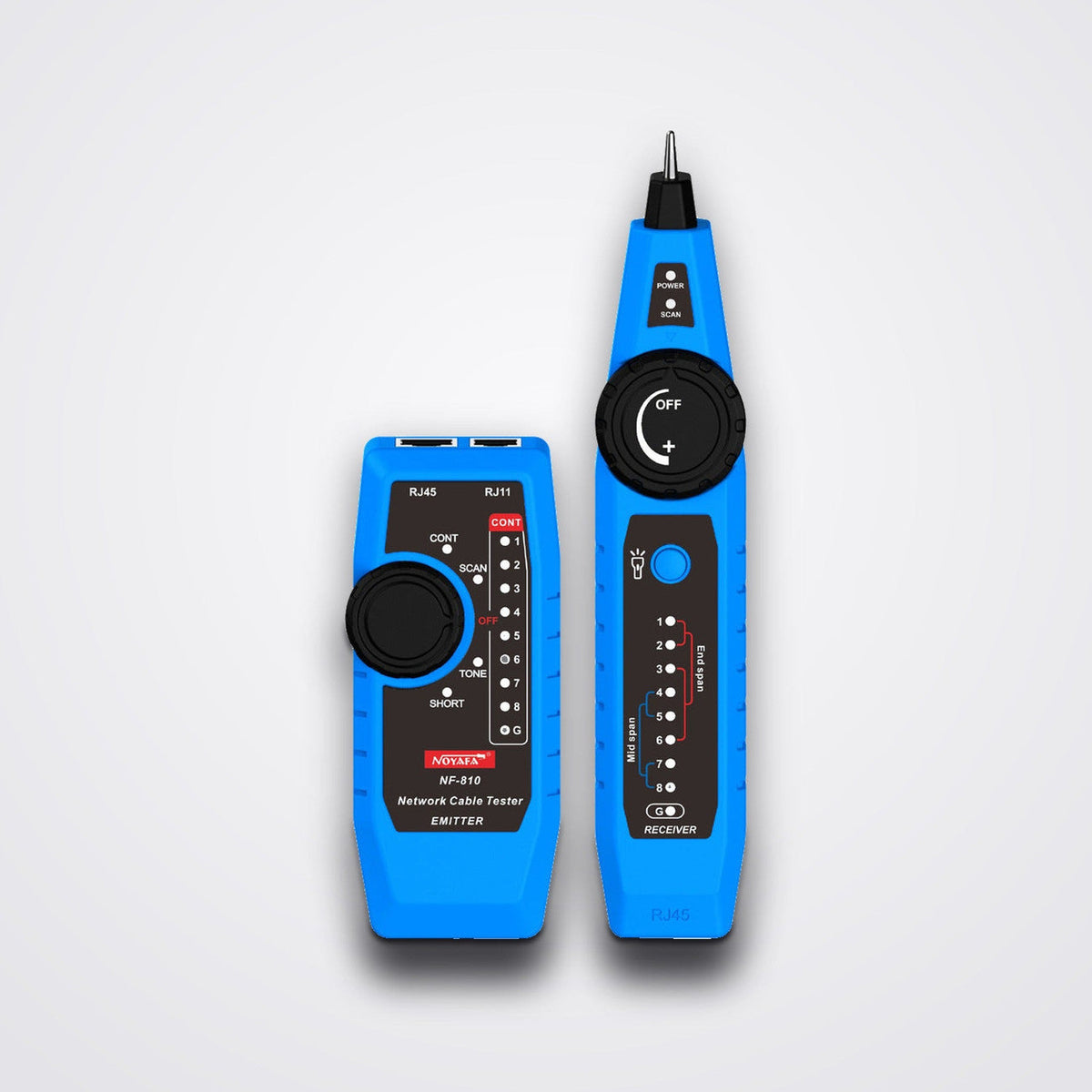
The NOYAFA NF-810 combines wire tracing and RJ45 network testing, with the listing also describing PoE checks. Keep cable identity and power questions separate. Finding the right run does not establish everything about the power available at its far end.
Use a simple record that shows which function answered each question, rather than one unexplained “network passed” result.

NOYAFA NF-810 supplier product image. Screen values and accessory layouts are illustrative; confirm the selected version.
Start with the physical run
Identify the endpoints and label the near-end connection. Follow the exact-model instructions for tracing and for any required disconnection from active equipment. A function intended for one connection state should not be assumed safe or valid in every other mode.
Use tracing to find a candidate, then confirm its identity using the permitted end-identification or wiring method. Keep the receiver location and confirmation result with the label. A strong tone alone can be misleading in a crowded bundle.

Supplier tracing application artwork; tone response is a candidate to confirm.
Give PoE its own checklist
Establish exactly what the supplied NF-810 version reports about PoE: supported arrangements, permitted voltage, displayed information and any test conditions. The short product description does not specify a complete power-budget, negotiation or loaded-performance test.
A power indication at a port does not independently establish that the whole run will deliver the device's required power under load. Cable condition, connectors, source capability and the powered device's requirements remain part of the investigation. Use an appropriate additional method when those questions matter.

A PoE indication does not establish loaded power delivery.

Supplier lighting illustration; not a verified cable-identification result.

NOYAFA grip photograph; the connection is shown for format context.
Keep network speed in a different column
The HomeNetworking complaint “only getting 100Mbps” illustrates another boundary. A wiring or tone result does not establish negotiated link speed or all transmission-performance characteristics. A connection can need further investigation even when simple continuity looks plausible.
The NF-810 listing describes CAT5, CAT6 and telephone-cable use. It does not establish formal category certification. If you need a Cat6a cable tester for a standards-based acceptance test, confirm the actual required capability rather than assuming any RJ45 tester qualifies.
After the physical checks, use suitable active-network observations and the device specifications to investigate data and power behaviour. Record changes to patch leads, switch ports or device configuration so that a later improvement can be attributed fairly.
The useful NF-810 job sheet has separate findings for run identity, wiring and the specific PoE observation. Keeping those questions separate makes the multifunction instrument more valuable: each result stays attached to the function and conditions that actually produced it.
For the current specification and supplied version, see the NOYAFA NF-810 product page.
For the related product overview, see the NOYAFA NF-810 Learn More page.