Hands Free Kitchen Bin For Weaning Parents Uk
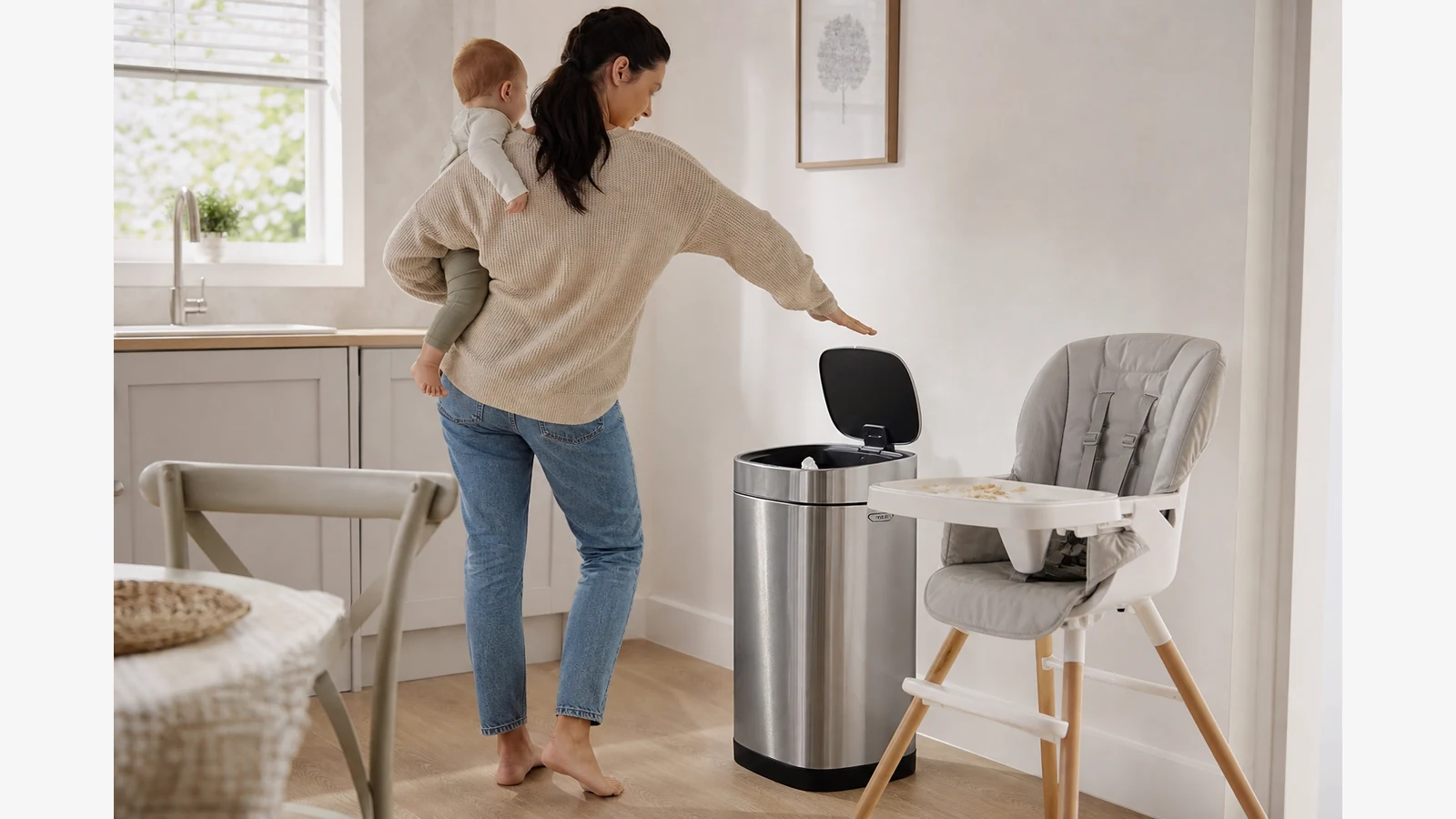
A motion-open bin with a quiet close helps when you are holding a baby on one hip and a scraped bowl in the other — it does not replace handwashing around baby food, and it is not a medical sleep aid. Treat touchless disposal as the scrap step in a weaning-week workflow, then wash hands before the next feed prep.
Hygiene still sits with you
NHS weaning and children’s food hygiene guidance emphasises clean hands around baby food prep and raw foods. Hands-free opening simply removes the awkward lid grab when both hands are already full. UK bin writing, including the Telegraph kitchen bin guide, positions touchless lids as useful precisely when you are carrying waste with occupied hands. Soft-close messaging on family-oriented retail pages such as NETTA’s soft-close kitchen bin listing likewise stresses quieter lids for busy households — convenience language, not clinical sleep claims.
Daypart schedule for weaning clear-ups
- Breakfast puree: wave the bin open with an elbow, drop peelings and wipes, let the lid close without a slam while a baby dozes in a bouncer nearby.
- Lunch wipe-down: keep the bin beside the highchair path so you are not crossing the whole kitchen with sticky hands.
- Evening bottles and pouch waste: dispose packaging touch-free, then wash hands before preparing the next feed.
- Midnight bag runs: if the kitchen is dark, a night-light sensor variant can reduce fumbling — still keep volumes modest so you are not rattling a full liner at 02:00.
Parent checklist
- Sensor height reachable with an elbow while hip-carrying
- Quiet, controlled close rather than a spring slam
- Wipeable shell for yoghurt arcs and porridge splashes
- Optional night-light SKU only if midnight waste is routine
- Plan for toddler curiosity: supervise, and use manual discipline or lid-lock habits if play-triggering becomes a pattern
Who should wait
Households unwilling to supervise curious toddlers around a motion lid, or who need certified childproof hardware, should not treat a domestic sensor bin as a safety device. Lid pinch risk is not eliminated by marketing copy — teach older siblings not to test the closing edge.
Sizing for family residual waste
Most weaning kitchens do better with a 20L primary residual bin; add a night-light variant only if dark-kitchen runs are nightly. Compare litres in 9L vs 20L and power behaviour in rechargeable vs battery. Review options on the EKO Deluxe product page.