
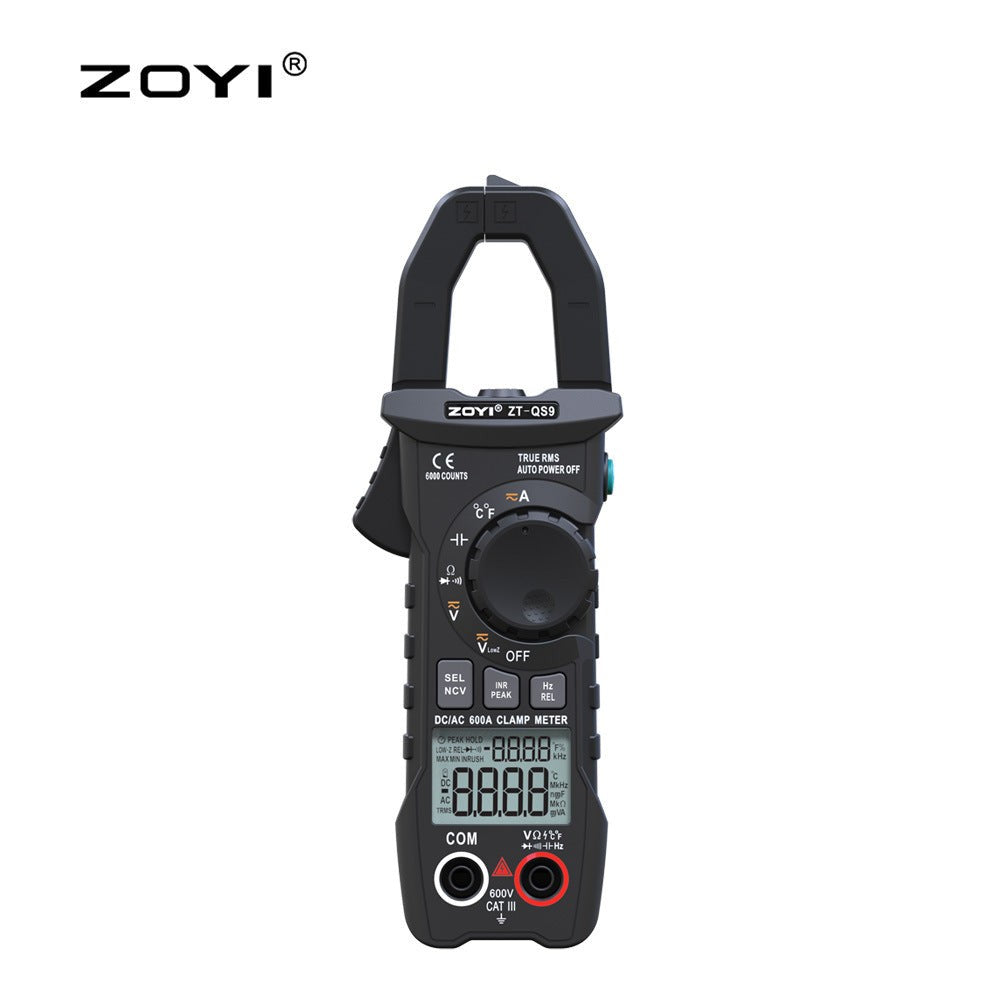
To compare motor starts with the ZOYI ZT-QS9 clamp meter, keep the start conditions as consistent as the meter settings. Inrush current, a retained peak and a frozen display describe different observations. A large number is not useful until you know which function captured it and what the machine was doing.
The ZT-QS9 lists AC clamp current, True RMS, a 6000-count display, inrush capture and peak/data hold. This makes a structured start comparison possible within the instrument's documented limits; it does not make every brief electrical event visible.

Select and document the capture function before a permitted motor start.
Define the comparison before the first start
For a competent technician working under an approved procedure, a useful question might be: “Does this pump start differently under the same permitted operating conditions?” That is more precise than “Is the inrush high?”
Identify the circuit, the single conductor to be measured and the machine's starting method. Record supply conditions where relevant, the mechanical load and whether the motor is cold or warm. Observe the equipment's permitted restart interval. Repeated rapid starts can stress a motor or compressor and do not create a fair test merely because the meter can take another reading.
Do not remove guards or expose live conductors to create access. Use the appropriate measurement arrangement and confirm that the complete instrument-and-lead setup suits the installation.
Give each capture mode its own job
| Function | Useful question | Interpretation limit |
|---|---|---|
| Inrush | What did the instrument capture during its defined start window? | Depends on triggering and capture behaviour in the manual |
| Peak hold | What peak did this function retain? | Not automatically the same measurement as inrush |
| Data HOLD | What value was displayed when HOLD was applied? | Does not search the past for a missed event |
| Normal current | What is the running-current observation? | May not represent the short starting event |
The listing does not establish the precise inrush capture window or a numerical maximum current range. Verify those in the supplied manual before planning the test. Do not substitute figures from a visually similar clamp meter.
Re-arm and record, rather than chasing one dramatic result
Use the documented sequence to prepare the inrush function before the permitted start. After the event, record the value, mode and whether the capture was successful. Reset or re-arm as directed before the next comparison.
A compact record could contain start number, cold/warm state, load condition, capture mode, captured current and later running current. Include observations such as a delayed start or a control change. A missed trigger should be recorded as a missed capture, not entered as zero current.

Conceptual shape only. The actual inrush and peak behaviour depends on the instrument manual and the test conditions.
Interpret the spread before blaming the motor
If repeated permitted starts produce different results, first check what changed: restart timing, mechanical pressure, supply, clamp position or capture preparation. The spread itself may be useful, but a measurement method with uncontrolled conditions cannot isolate the cause.
A motor that starts differently might need a broader investigation involving voltage, controls and mechanical load. The ZT-QS9 current result is one input to that work. It does not identify a failed winding or justify a protective-device change by itself.
True RMS helps describe AC magnitude within the meter's specified limits. It does not guarantee unlimited bandwidth or capture of every short transient. Likewise, 6000 counts describes display capability rather than an inrush sampling rate.
Check AC versus DC before choosing the tool
“DC current on the clamp” is a separate purchasing requirement from AC inrush. The reviewed ZT-QS9 jaw function is AC current. Its AC/DC voltage functions do not establish DC-current measurement through the jaw.
For a DC starter or battery circuit, select an instrument with explicitly suitable DC-current capability, range and capture behaviour. For an AC motor comparison, check those same details against the actual start event rather than relying only on the word inrush.
The ZOYI ZT-QS9 product page describes the current model. Our related clamp-current guide explains the broader measurement principles; the repeatable start record above supplies the task-specific context.
Explore the ZOYI ZT-QS9
See its functions, suitable tasks and key limits before choosing.