
A NOYAFA NF-526E thermal camera can show how a radiator's surface-temperature pattern develops, but a cold patch is not a diagnosis by itself. Before attributing the pattern to air, deposits, a valve or a hidden leak, control the conditions and establish what further observation would distinguish those explanations.

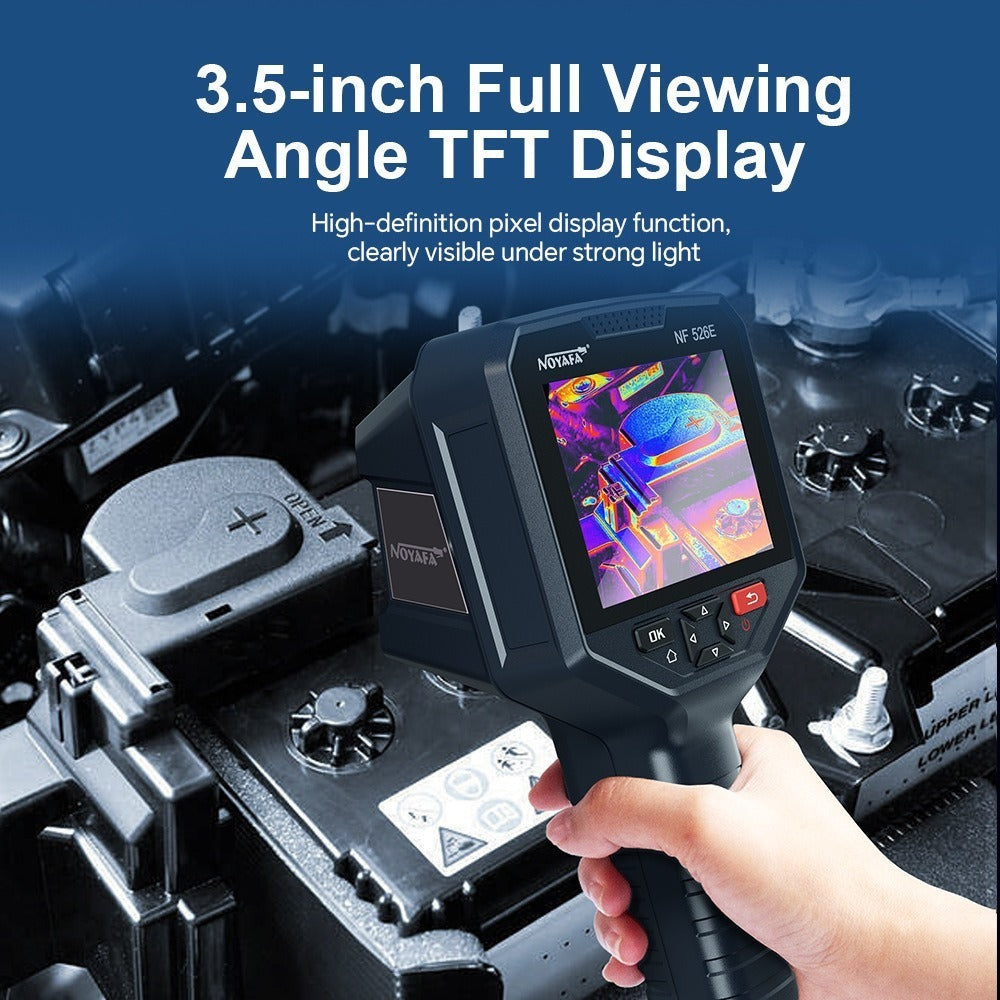
The handheld NF-526E supports surface-temperature inspections; this product-page example shows equipment inspection.
Compare radiators at a meaningful point in time
Record when the heating started and whether the system is still warming up or has reached a reasonably steady operating state. Note the room, valve setting, whether a thermostatic valve is responding to local warmth, and any obvious obstruction to air movement.
Comparing one radiator just after its valve opens with another that has been running for an hour is not a controlled comparison. A slow change during warm-up may tell a different story from a persistent pattern under otherwise similar conditions.
The NF-526E has a 256 × 192 infrared detector, a 3.5-inch display and a listed −20 to 400°C temperature range. The older “240x240” wording in the store URL is not its current detector specification. Detector pixels, display size and the number of colours in a palette are different things.
Keep the viewing geometry consistent
Look at comparable painted surfaces from similar distances and angles. Bare or polished metal, reflective trim and a radiator viewed through furniture can mislead the comparison. Thermal imaging does not see through an ordinary glass cover or reveal water directly inside a pipe.
Make the radiator fill a useful part of the frame without moving into an unsafe or awkward position. Check the displayed temperature scale and emissivity setting. Automatic scaling can make two radiators appear equally dramatic despite different temperature ranges.
For a repeat image, return to the same view and operating state. Save a visible-light location photo or note so that “top left” has an unambiguous meaning later. Do not compare an exposed pipe temperature with the radiator's painted panel as if surface finish had no effect.
Describe observations before explanations
Useful notes might say “upper band appears cooler after 20 minutes” or “one side warms before the other”. Less useful notes jump straight to “blocked radiator” without recording timing, valve behaviour or the temperature scale.
| Observation | What to establish next |
|---|---|
| A pattern changes substantially as the system warms | Whether it persists under a comparable, steadier condition. |
| One radiator differs from similar radiators | Room demand, valve settings, radiator design and system operating state. |
| A bright area moves when the camera angle changes | Whether reflection or a surface difference explains the appearance. |
| A room remains cold despite an apparently warm panel | Air circulation, controls, room heat demand and other system factors. |
These questions help organise a discussion with a heating professional. They do not authorise opening a pressurised system, adjusting a boiler internally or handling hot water. Follow the equipment's user instructions for any permitted routine task.
Make a thermal image useful to someone else
The manufacturer lists JPG and MP4 recording with onboard storage. Test saving and retrieving a sample before collecting a full set. Name files by room and radiator, then keep the time since heating start, settings, viewing position and thermal scale with each file.
If you share images for troubleshooting, include the symptom: for example, whether the room fails to reach its set temperature or whether the concern is a newly changed pattern. A gallery of unexplained colours gives the next person less information than a small set with consistent context.
Decide what the camera cannot settle
A surface pattern may justify a closer investigation, but cannot alone prove flow rate, identify a concealed leak or establish the internal cause of a cool region. A contact measurement, control check or professional system assessment may be the appropriate next step.
The NF-526E is most useful here as a comparison tool: keep conditions visible, notice repeatable differences and narrow the next question. Avoid replacing a physical explanation with a palette colour. For more on emissivity and surface interpretation, see how thermal imaging cameras work.
Explore the NOYAFA NF-526E
See its functions, suitable tasks and key limits before choosing.