
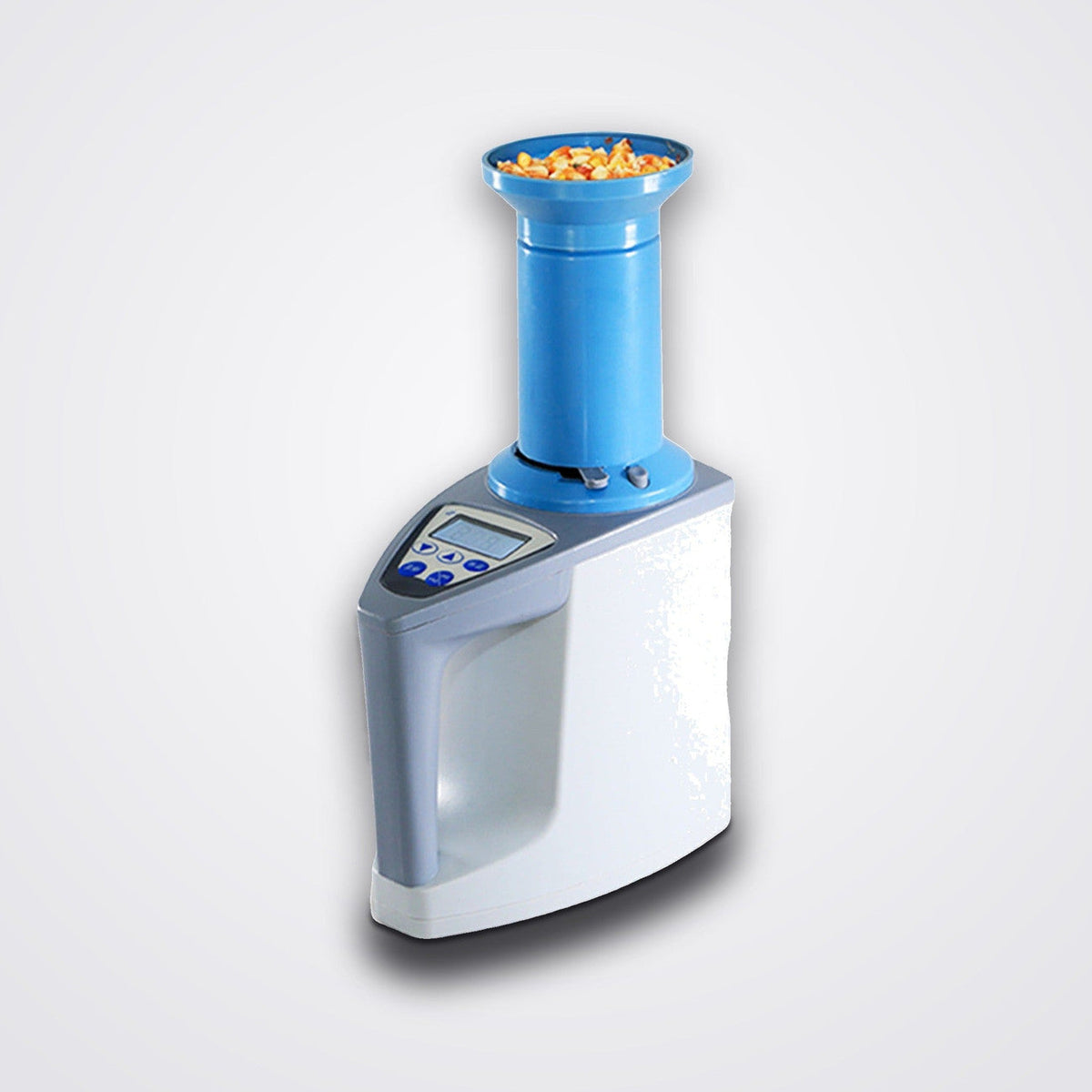
The LDS-1G is a cup-type grain moisture meter with a listed 3–35% range. When repeated readings disagree, there are two different questions: did the grain sample change, or did the way you filled the cup change?
A small repeatability trial separates those questions before you draw a conclusion about a load. It is especially useful when more than one person uses the meter at harvest or intake.

LDS-1G supplier product image. Screen values and accessory layouts are illustrative; confirm the selected version.
Begin with one identified sample
Take a representative sample using the procedure appropriate to the crop and lot. Keep its identity, collection position and time with it. Grain from one convenient handful need not represent a trailer, bin or store. If the grain is visibly mixed or the sample conditions are uncertain, resolve that before expecting the meter to summarise the whole lot.
Use the exact LDS-1G instructions for crop selection, sample preparation, temperature handling, cup filling and operation. The funnel is part of the arrangement, not permission to improvise the amount or packing method. Keep the cup clean and prepare the meter on a stable surface in suitable conditions.

Supplier control illustration with grain samples; not our sampling trial.
Repeat the handling, not just the display
Use one suitably prepared sample to make several independent fills under the prescribed method. Empty and refill as directed, keeping the operator and procedure consistent. Record every result rather than keeping only the middle or preferred number.
Then compare another operator following the same instructions. A difference that appears mainly between operators suggests reviewing the handling method. A spread that remains when handling is consistent may require examining the sample, crop calibration or instrument condition.
The published product description gives a repeatability figure of “0.2” without a complete definition or test conditions. Do not turn that isolated figure into a guaranteed field tolerance. Resolution, repeatability and agreement with a reference method answer different questions.

Repeated fills of one sample are not independent samples of a lot.
Compare the right things at intake
Grain discussions recommend checking a sample against a grain laboratory or intake reference. In UK practice, use the actual buyer's or laboratory's applicable method and requirements. A handheld observation does not replace a contractual measurement merely because both report moisture percentage.
Keep a portion of the identified sample appropriately if a comparison is needed, following the sampling procedure so that its condition does not drift unnoticed. Compare like with like: the same crop identity, suitable preparation and clearly recorded times.
Your final record should distinguish within-sample handling variation from variation across the lot. The LDS-1G is most informative when a repeated cup routine produces a reading that can be traced back to a sample, rather than a number detached from how the cup was filled.
For the current specification and supplied version, see the LDS-1G product page.
For the related product overview, see the LDS-1G Grain Moisture Meter Learn More page.