
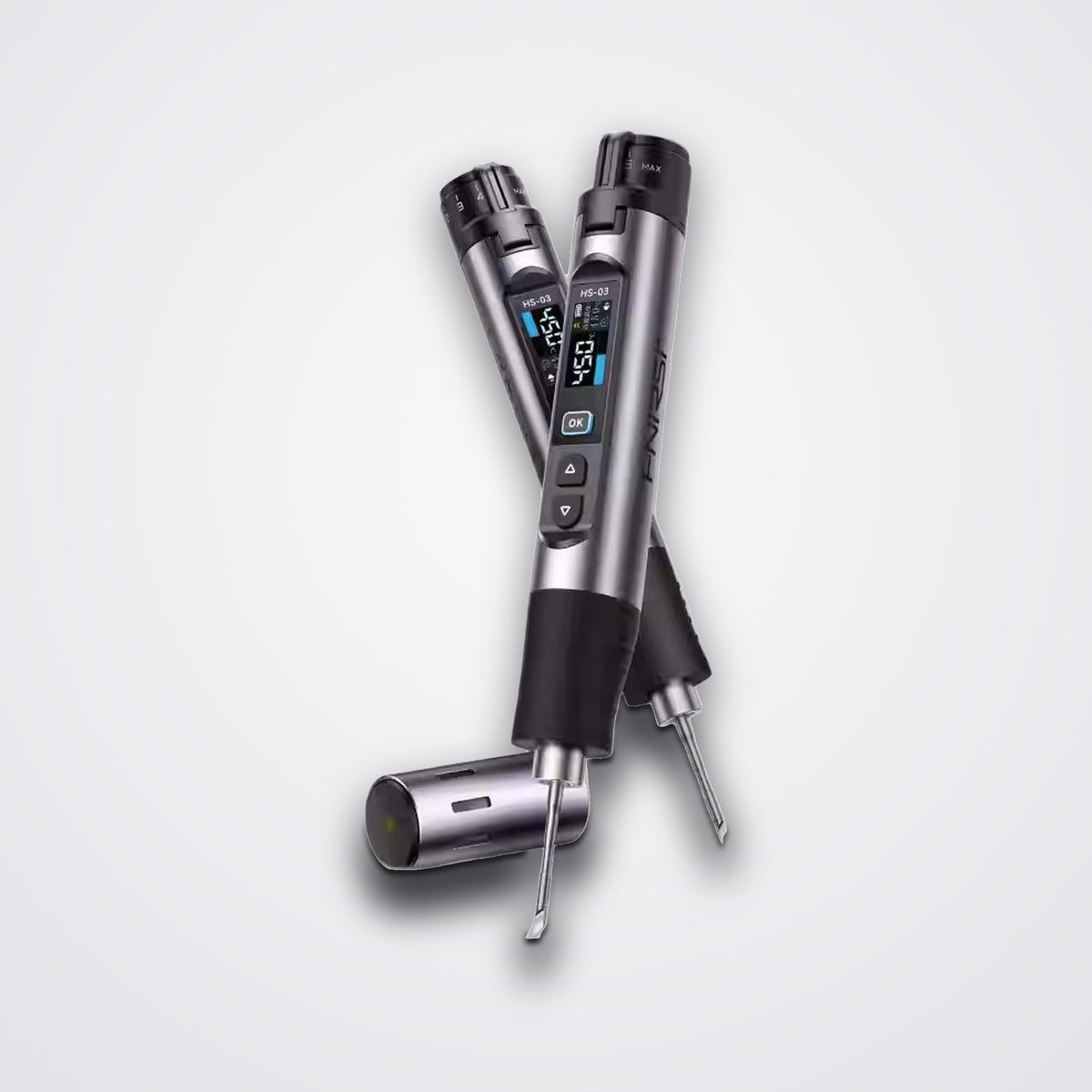
The HS-03 is described by the manufacturer as a cordless USB-C soldering iron with a removable 2600 mAh battery, 100–450°C range and F210 tip. The practical preparation is a small, isolated repair: secure the work, protect the joint and decide whether cordless or USB-C power is the right mode before heating.

HS-03 Soldering Iron — supplier product view.

A second supplier view used to confirm the exact model and interface.
Set up the repair, not just the iron
An X result uses the phrase ‘heating the joint, not the solder’ and pairs it with ‘cold joint’ and flux. That is useful workshop language. Fix the wire or component in a holder, expose clean metal, apply an appropriate amount of flux and plan where the hot tip will rest. Keep the board unpowered unless the procedure explicitly requires otherwise.

Manufacturer application artwork; it illustrates a possible setup and is not an EkoDeluxe test.
Choose the power path
The manufacturer description supports both the removable battery and Type-C power. Check the actual kit, battery condition and cable before the job. The merchant record identifies the HS-03 high-config kit but does not establish run time or a particular USB-C supply. Do not borrow HS-01 assumptions from a different model.

Original workflow diagram: the record keeps setup, observation and boundary together.
Make the joint observable
Set a moderate temperature, touch the joint long enough to transfer heat, feed solder to the heated joint and remove the solder before the tip. Inspect wetting, shape and movement under magnification. The supplier artwork shows a hand-held board application; it is a manufacturer-use illustration, not a site test.
Finish with the mechanical check
Let the joint cool, then inspect for a cold joint, bridge or strain at the wire. A stable display is not proof of a sound connection. Record tip, mode, temperature setting and the visual result so the next repair starts with a known setup.
Keep a record someone else can use
A small soldering record should include the joint photograph before and after, tip identity, power mode, temperature setting and inspection result. Let the part cool before the mechanical check. The HS-03 power path does not replace choosing the right wire, flux, solder and strain relief.
A practical handover
Write down the exact model, the setup, the observation and the limit that still needs checking. For current version and buying information, use the HS-03 Soldering Iron product page.
For the related product overview, see the HS-03 Soldering Iron Learn More page.