
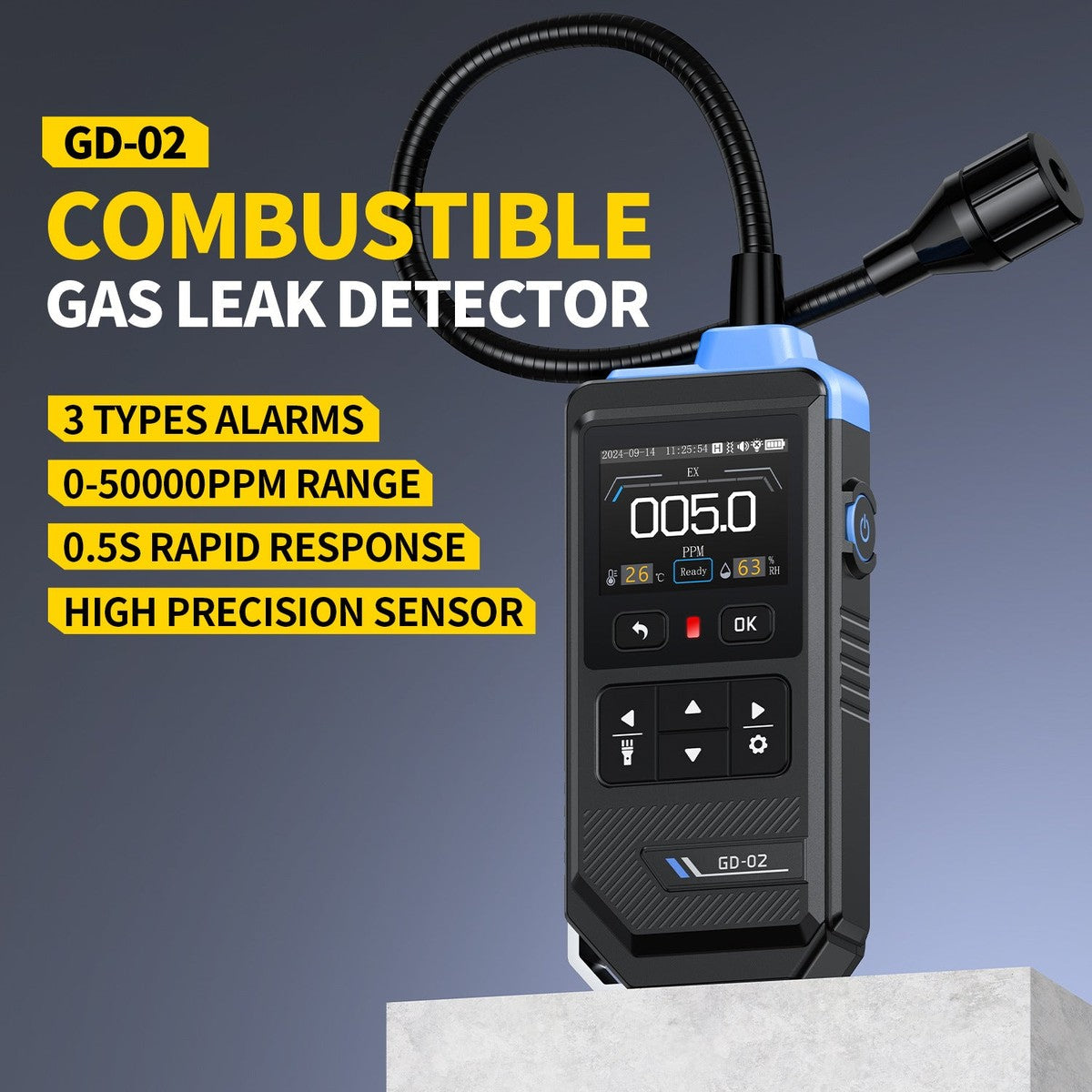
The phrase gas detector for home can refer to several very different products. The FNIRSI GD-02 is a handheld combustible-gas leak detector whose listing names methane, propane and isobutane. That is a different job from detecting carbon monoxide, and different again from providing a permanently installed alarm.
Understanding the distinction makes it easier to buy the right equipment without expecting one handheld tool to cover every gas-related concern in a property.

Identify the substance and the purpose
Methane is associated with natural gas, while propane and butane-family fuels appear in other appliances and supplies. Carbon monoxide is a different gas that can arise from incomplete combustion. A detector's response to a fuel gas does not establish CO detection capability.
The GD-02 listing names its combustible-gas targets. It does not establish oxygen measurement, CO₂ measurement or a general air-quality analysis. Do not infer those functions from the word gas or from another FNIRSI model.
| Need | Equipment role to investigate |
|---|---|
| Continuous warning for a particular household hazard | An appropriate installed alarm with the required certification and placement |
| Planned combustible-gas leak-finding work | A suitable handheld detector within an authorised method |
| Appliance combustion assessment | Appropriate analyser, procedure and qualified professional |
| Occupied-room ventilation observation | A suitable CO₂ monitoring method |
Understand the handheld role
A handheld instrument only observes where and when it is used. A unit stored in a drawer cannot provide continuous warning throughout a home. Its presence therefore does not replace installed alarms, servicing or a professional inspection.
For a planned task, the user needs the exact model's instructions, readiness checks, target-gas response and environmental suitability. The short GD-02 listing is not enough to invent a numerical sensitivity, concentration range or certification claim.

Do not turn an emergency into an equipment experiment
If gas is suspected, leave the affected area and follow the applicable gas emergency advice. Do not stay to compare instruments, search for the strongest response or decide whether an installed alarm is correct. A reassuring handheld display is not a reason to ignore a suspected emergency.
Likewise, deliberately releasing fuel gas to test a detector is not a suitable familiarisation exercise. A bump test means the specified functional test carried out with appropriate equipment and procedure, not an improvised demonstration.
HSE's gas detector guidance explains why detector suitability and the complete sampling arrangement matter. Calibration, functional checking and the particular substance all contribute to a reliable measurement system.
Make a useful purchase note
Write the intended gas and task, then confirm that the current GD-02 documentation covers them. Ask about the appropriate functional check, sensor servicing and any accessories needed for the intended role. Do not substitute an attractive feature list from a sibling product.
If the real requirement is a domestic CO alarm, choose that category directly. If the requirement is a gas engineer's inspection, book the appropriate service rather than treating ownership of a detector as equivalent competence.
Where the GD-02 fits
The GD-02 is relevant to buyers seeking its specified handheld combustible-gas detection role. Its value comes from being used for that defined purpose, within a suitable procedure, alongside the other protections the property needs.
That clear division of jobs is more useful than a broad claim that one device keeps a whole home safe.

See the FNIRSI GD-02 product page for the current version and kit, or read the FNIRSI GD-02 overview before choosing.