
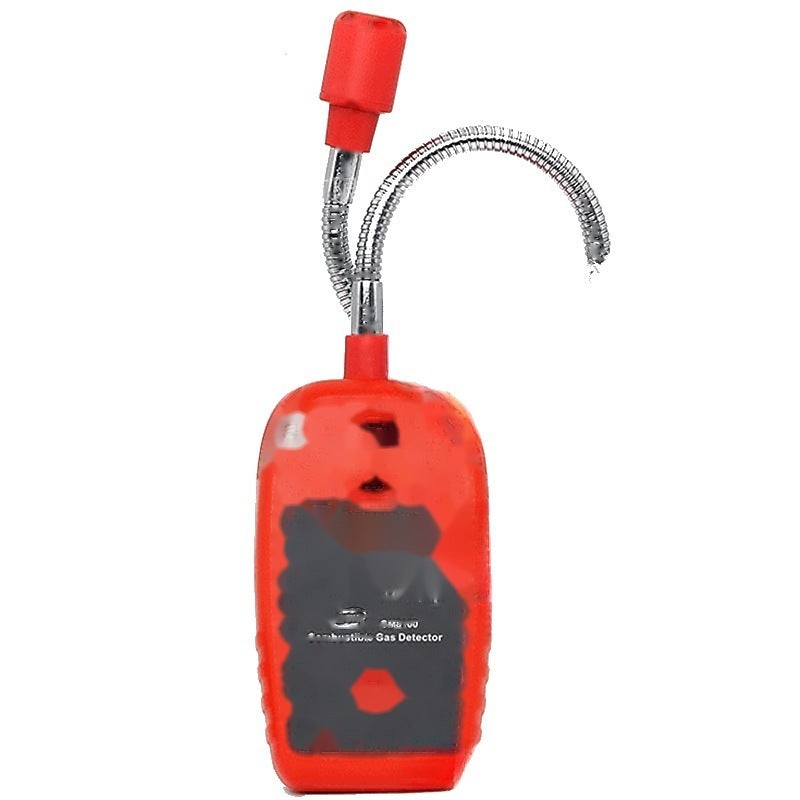
The BENETECH GM8100's 30 cm gooseneck lets the sensor reach positions that would be awkward for the whole meter. That is an access benefit, not permission to move into a suspected hazardous atmosphere or dismantle a gas appliance.
For a trained person preparing an authorised routine check, the useful planning question is whether the probe can reach each defined observation position without disturbing the installation or losing track of where a response occurred.

Keep the sensor position visible and identifiable
A long reach can make it tempting to push the probe into a gap and watch only the instrument body. Instead, plan access so the user can identify the sensor's position and keep it clear of unsuitable hot, moving or wet surfaces under the manufacturer's instructions.
Label planned observation points on a simple sketch. If two fittings are close together, the record should still distinguish them. A response noticed after the tip has moved away cannot automatically be assigned to the point it is now beside.
Do not remove covers or disturb pipework to create access unless that is part of appropriately qualified, authorised work. If the planned position is inaccessible, record that limitation and choose the proper next step.
Prepare before approaching the task
The GM8100 listing describes approximately 60 seconds of warm-up at specified conditions, a two-second response and 50 ppm methane sensitivity. Use the actual instructions for preparation and readiness checking; the headline numbers do not replace the procedure.
Sensitivity is not a 0–50 ppm measurement range. The separately stated 10% LEL methane alarm limit also expresses a different characteristic. Avoid copying either into a job sheet as a universal safe level or a concentration applicable to every combustible gas.

Make movement part of the observation method
A rapid sweep, a paused observation and a different probe distance can produce different response patterns. Keep the authorised method consistent and preserve the location and timing of each observation. Do not treat a flexible probe as a way to collect reliable results faster than the instrument can respond.
The same principle applies to an apparent absence of response. Before relying on it, the instrument must have the required functional checks and be suitable for the gas and environment. A powered display is not evidence of a successful bump check.
HSE's gas detection safety alert emphasises suitability of the complete system and distinguishes functional checking from calibration. Do not improvise a test by releasing gas from an appliance or lighter.
Pack the small details that affect the visit
The GM8100 uses three AAA alkaline batteries. Check the actual battery condition, inspection requirements and storage method before the job. A nominal eight-hour battery-life claim is conditional, so it should not be the only basis for a day's equipment plan.
Keep the sensor and gooseneck protected in transit. If the instrument is damaged, contaminated or behaves unexpectedly, follow the service procedure instead of compensating with a different movement pattern.
Recognise when this is the wrong task
For someone searching for a gas detector for home, the GM8100 is a handheld combustible-gas leak finder. It does not replace installed fuel-gas or CO alarms, and it cannot certify that an appliance is safe.
If you smell gas or suspect a leak, leave and follow the gas emergency procedure. A routine access plan is useful only within properly controlled work. Its value is in making observations traceable to actual positions, rather than encouraging a closer search during an emergency.

See the BENETECH GM8100 product page for the current version and kit, or read the BENETECH GM8100 overview before choosing.