Kitchen Food Waste Caddy Vs Main Bin England 2026
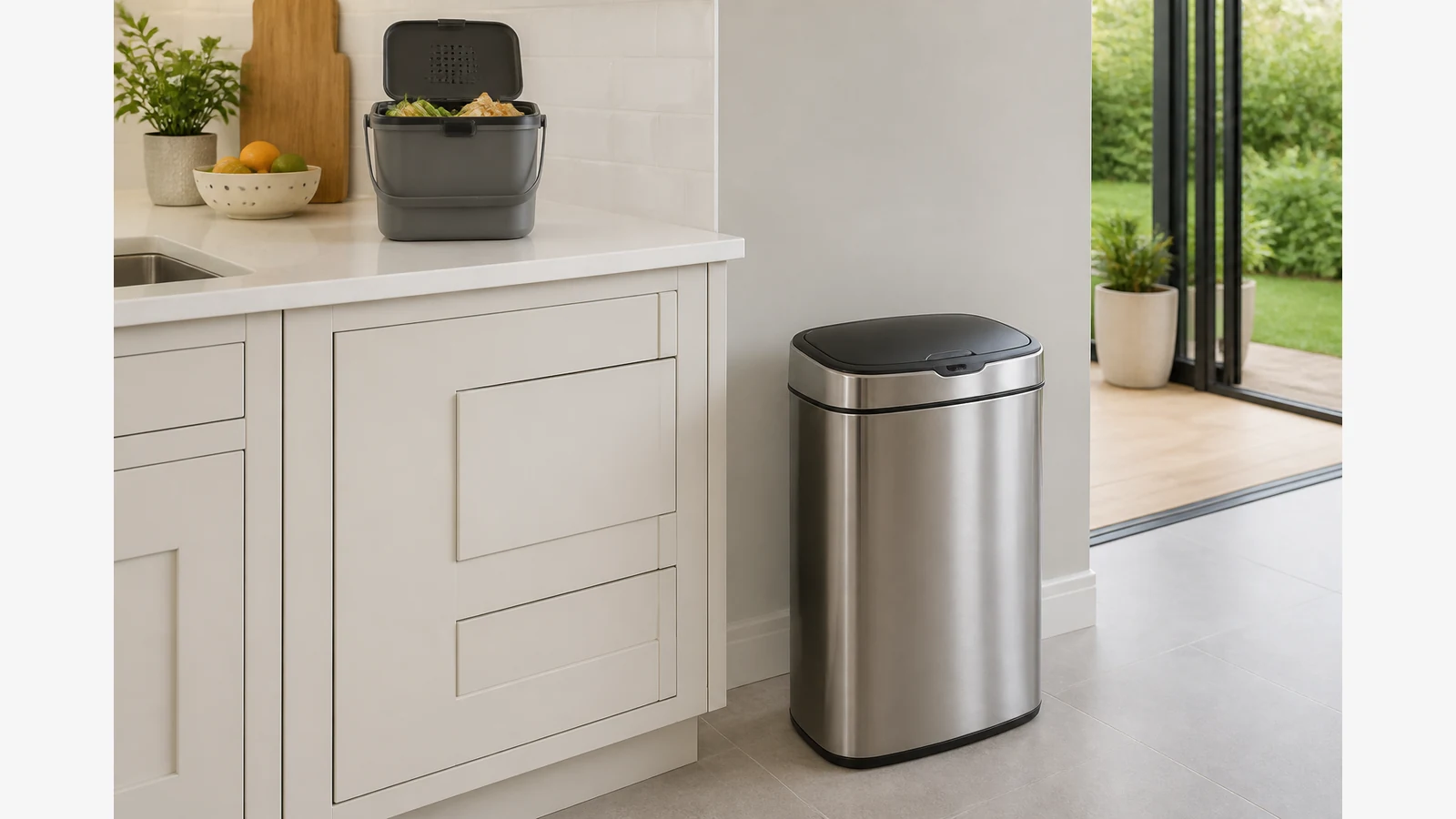
Under England’s Simpler Recycling rules, households are expected to use a small kitchen food caddy (plus a larger outdoor food bin) for scraps — while a main residual sensor bin still handles non-food residual waste that belongs in the black-bag stream. A touchless kitchen bin is a residual tool, not a substitute council food caddy.
What the national rules say — and what varies locally
GOV.UK guidance on Simpler Recycling in England sets out that, from 31 March 2026, collectors must collect food waste weekly by default, with a small kitchen bin and a larger outdoor bin. The Defra Environment blog on food-waste recycling explains the kitchen caddy’s role for scraps ahead of wider collections. Rollout is not identical everywhere: BBC coverage of England’s food-waste rules notes that some councils remain phased or delayed through 2026, so always check your local authority page before rearranging the kitchen.
This tracker is scoped to England. Scotland, Wales and Northern Ireland follow separate collection frameworks.
Decision path: what goes where
- Plate scrapings, peelings and leftover food → kitchen food caddy → outdoor food bin on collection day.
- Non-recyclable residual packaging and contaminated wrappers → main residual bin / black-bag stream.
- Keep both lids closed between uses to limit odour in open-plan kitchens.
- If your council has not started weekly food collections yet, keep following the current local leaflet until the service date arrives.
Practical two-vessel layout
- Food caddy: worktop corner or under-sink hook-out where scraps land during prep
- Freestanding sensor residual bin: end of the run or beside the back door for bagged residual waste
- Do not upsize to a huge dual unit solely for food waste if a free council caddy is arriving
Who should not buy a dual unit “for the rules”
If your council supplies a kitchen caddy and outdoor food bin, spending on a second specialised food vessel is usually redundant. Spend attention on residual capacity instead — typically a 9L satellite or 20L primary touchless bin that sits cleanly beside the caddy.
Size the residual bin beside the caddy
Use 9L vs 20L sizing for residual litres, and keep raw-meat scraps hygiene tight with cross-contamination workflow tips. Match a freestanding residual option on the EKO Deluxe product page.