
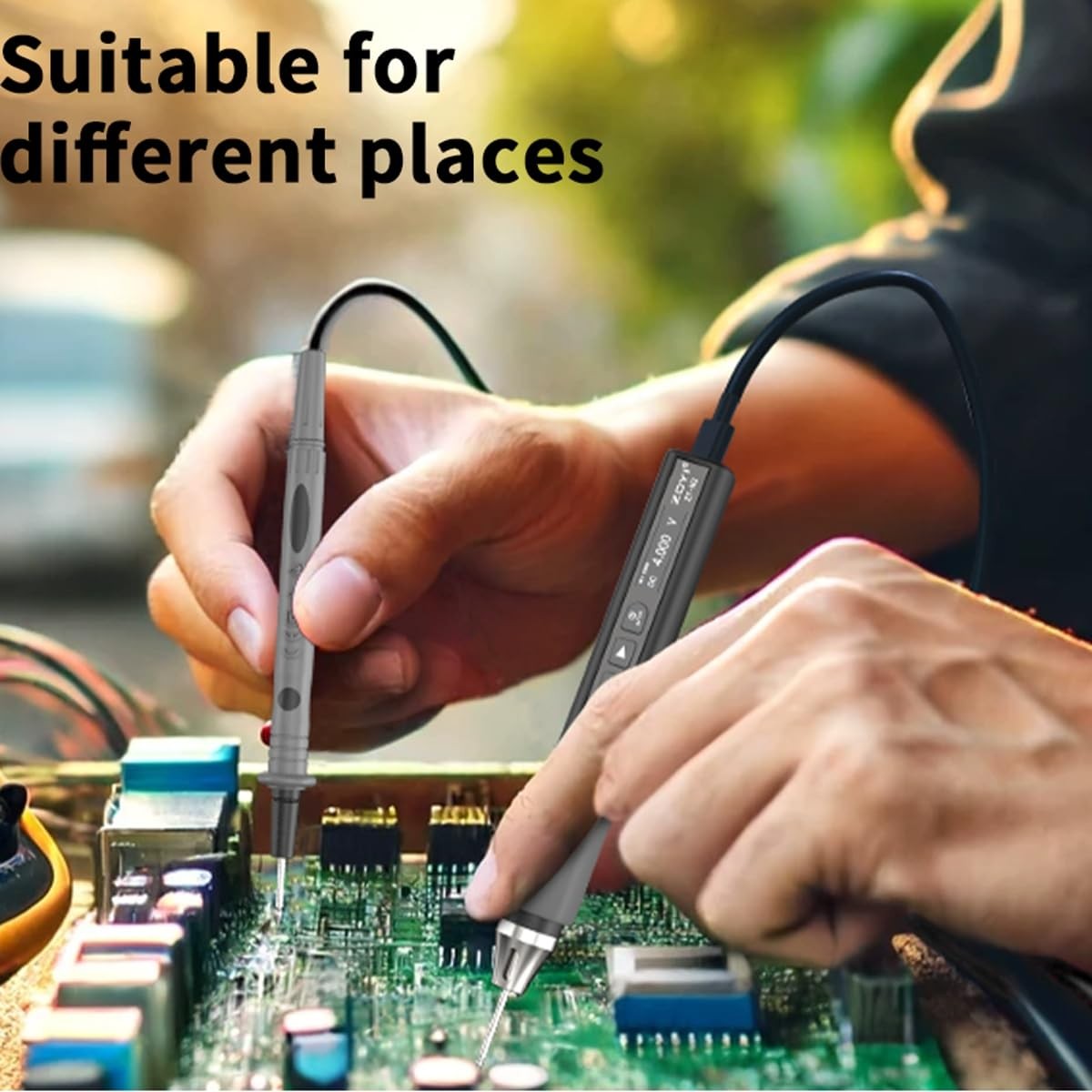
The ZOYI ZT-N2 combines a pen-style multimeter and a temperature-controlled soldering iron. Its practical value is a compact repair sequence: identify a problem, stop and change the setup, solder, then verify. The transition between measurement and heating is the part that deserves deliberate attention.
Use this workflow on a suitable isolated low-voltage electronics item. The presence of both functions in one body does not make it safe to solder a powered board or handle a hot tip as if it were a measurement probe.

Store application illustration: support the board and establish the correct circuit state before measuring.
Diagnose enough to know what you intend to repair
Before heating anything, inspect the connection and identify the circuit points. The ZT-N2 lists AC/DC voltage, resistance and continuity functions. Choose the required function and establish the correct circuit condition. Resistance and continuity checks require appropriate isolation and discharge.
A continuity beep across a joint can be useful, but it does not prove mechanical strength or good performance under load. Parallel paths on a board may produce continuity even if the suspected joint is poor. Record the specific symptom and the evidence that points to the repair location.
For intermittent behaviour, distinguish an unstable probe contact from an unstable joint. Do not keep pressing harder on a fine pad to obtain a desired reading. Support the board and use a suitable contact method.
Stop the measurement before changing hardware
Disconnect the instrument from the circuit and follow the manual's sequence for switching between the measurement probe and soldering tip. Remove power as required, and allow hot parts to cool before handling or changing them. An interchangeable tip system does not mean every part can be changed while energised.
Prepare a stable iron stand, suitable ventilation and a clear work surface. Keep the power lead away from the hot tip. Confirm that the USB-C supply and cable support the required PD/QC arrangement; a connector that fits is not proof of a suitable negotiated supply.
The listing describes adjustable PID-controlled soldering and automatic sleep, but it does not establish a verified wattage or full temperature range here. Use the supplied specifications and the needs of the joint rather than borrowing settings from another pen iron.

Soldering application illustration. Disconnect the item, support the work and follow hot-tip handling precautions.
Match the tip and technique to the joint
Use a compatible tip with geometry suited to the contact area. A very fine tip is not automatically the best choice: insufficient contact area can make heat transfer slow and encourage prolonged heating. Follow the solder, component and board requirements, and avoid treating the displayed setpoint as a direct measurement of the joint temperature.
Apply only the heat and solder needed for the intended connection. If solder does not wet properly, investigate cleanliness, tip condition, flux compatibility and heat transfer rather than increasing the setting without a plan. Keep nearby components and insulation clear of the heated area.
Automatic sleep can help manage an idle tool, but it is not a substitute for a safe stand or for disconnecting power when the work is finished.
Inspect first, then measure again
Let the joint cool without movement. Inspect for bridges, displaced components and damaged insulation. Change back to the measurement setup only through the documented cooled and disconnected procedure.
Repeat the relevant unpowered checks, including possible shorts to adjacent points. Where a powered functional test is appropriate, use a separate planned setup with suitable current limiting and protection. A successful continuity result does not authorise immediate connection to an unrestricted power source.
Keep before-and-after observations distinct. “The intended path now reads continuously under this check” is a narrower, more useful statement than “the device is fixed” if the functional test has not yet been completed.
Decide whether the combined format suits the job
The ZT-N2 can reduce the number of bodies in a compact kit, but one tool cannot measure and heat independently at the same time. A larger repair session may benefit from a separate meter that remains connected while the iron is safely parked elsewhere.
Check the ZOYI ZT-N2 product page for the compatible tip and power details. Our related electronics-measurement guide provides additional context for choosing the check that actually answers the repair question.
Explore the ZOYI ZT-N2
See its functions, suitable tasks and key limits before choosing.