
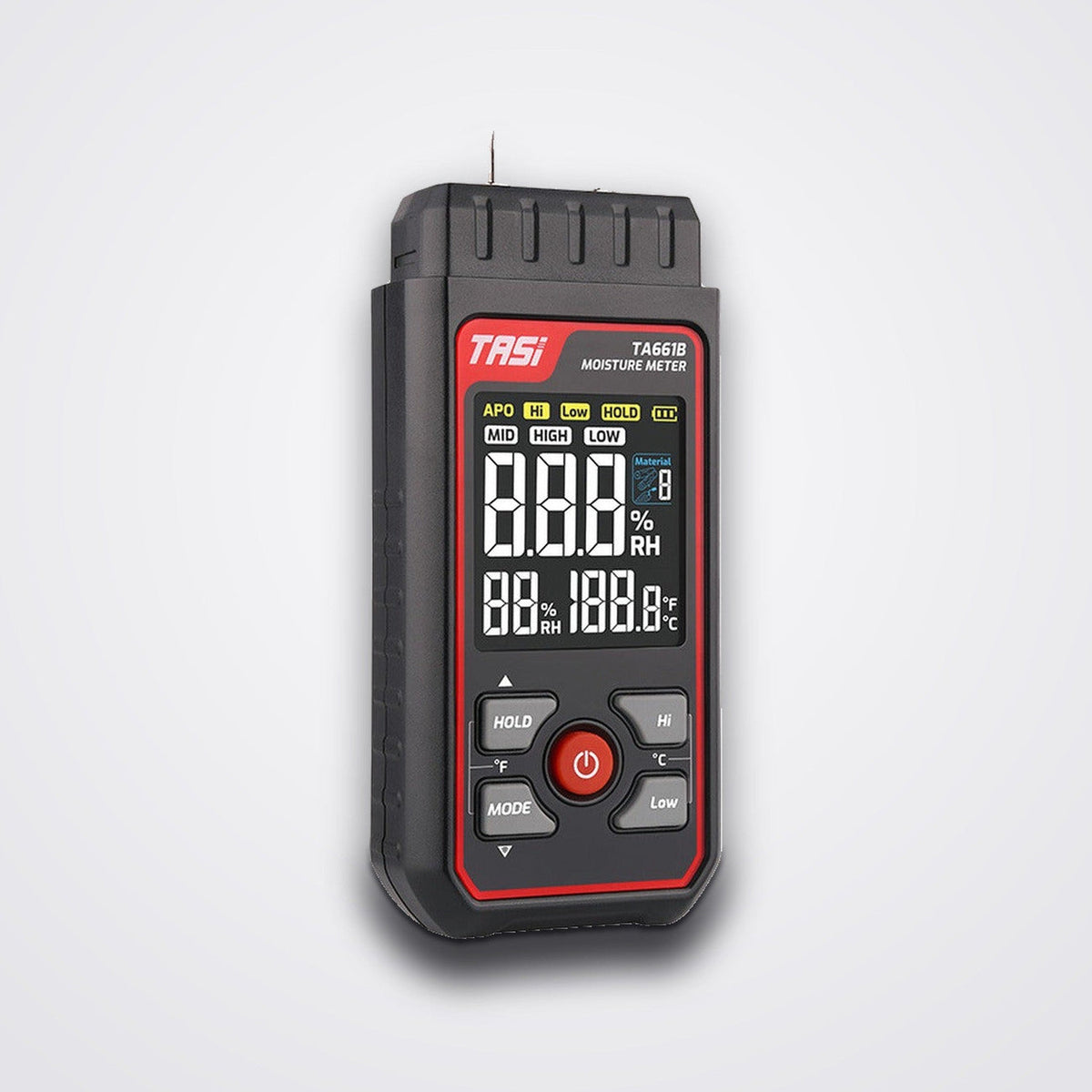
The TASI TA661B is a pin-type log moisture meter. If two people obtain different readings from the same log, do not immediately decide that one meter or one operator is wrong. They may have measured different material, used different contact or selected different settings.
An operator comparison is useful because firewood is not a uniform reference block. Make the method agree before comparing the numbers.

TASI TA661B supplier product image. Screen values and accessory layouts are illustrative; confirm the selected version.
Agree on the sample before touching the pins
Select representative pieces from the batch and identify them. Follow an appropriate safe splitting method to expose an interior face when the task is assessing the inside of a log. Online firewood discussions often call this a “fresh split”; a dry outer face can give a different picture from the interior.
Mark the intended measurement region without creating an unsafe pin target for the next person. Establish the correct material setting, pin placement, insertion and temperature treatment from the exact TA661B instructions. Do not transfer another meter's species grouping or pin-depth rule without checking compatibility.

Supplier grip photograph; no wood sample is being measured.
Compare repeatability at one agreed location
Have each operator follow the same documented method on the identified sample. Record the settings and results, including any difficulty establishing contact. Use a sequence that avoids pretending the wood or contact holes are unchanged if repeated probing alters them.
Then repeat the process on other representative pieces. If the difference follows the operator across samples, review handling and configuration. If both operators find a particular piece different, investigate the sample variation. Keeping those two patterns separate is more informative than averaging everything immediately.

A repeated reading at a different place is a different observation.
Keep the decision specific to the use
A moisture meter for firewood supports sampling and comparison. It does not make a universal burning, flooring or construction decision from one reading. Use the requirements and prescribed method appropriate to the actual fuel, timber or building task.
The product description's promise of a quick result does not establish a universal settling time or accuracy under every condition. Check the range, accuracy and material instructions for the supplied version before using it near an acceptance boundary. Do not convert a building-material scale into wood moisture percentage by assumption.
Finish the comparison with an agreed method card: sample selection, material setting, contact method, operator and interpretation. Keep the raw readings beside it. The TA661B becomes easier to share when everyone knows what “we measured this log” actually means, rather than treating operator variation as an argument about who held the meter correctly.
For the current specification and supplied version, see the TASI TA661B product page.
For the related product overview, see the TASI TA661B Learn More page.