
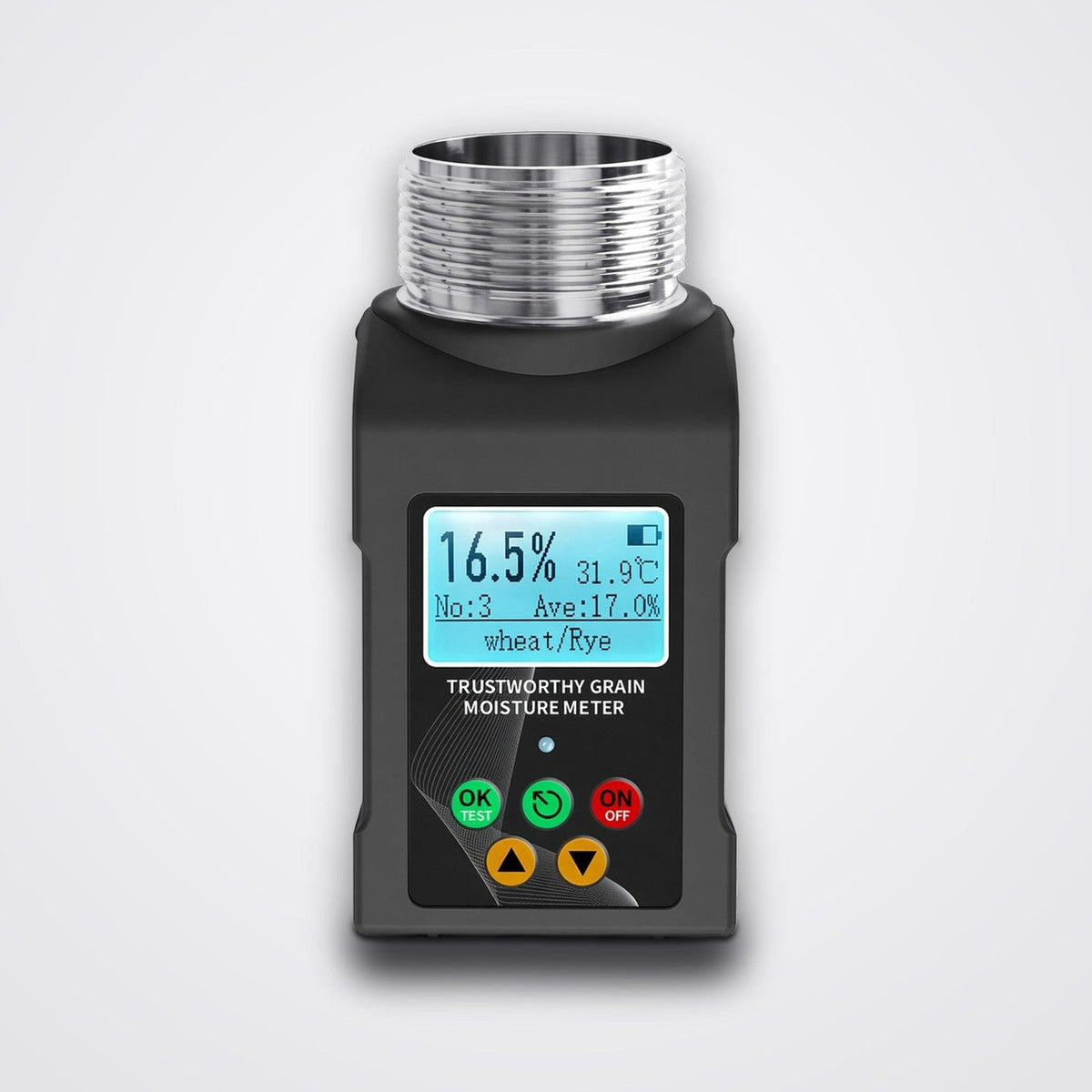
This screw-cup grain moisture meter lists a stainless-steel cup, blue LCD and calibrations for 43 grain types. Its crop selection and filling routine need to travel with every reading. The cup's familiar appearance is not enough to make two operators prepare the same sample in the same way.
Write a short handling routine from the supplied instructions before using the meter for comparisons between batches.

Screw-Cup Grain Moisture Meter supplier product image. Screen values and accessory layouts are illustrative; confirm the selected version.
Keep the crop programme explicit
Identify the grain and select the corresponding calibration according to the exact meter's manual. Record its name or programme code. Do not substitute a calibration simply because the grain looks similar to one shown in the menu.
Check that the sample preparation, temperature and intended moisture range suit that calibration. The published product description does not define every programme or its conditions. The number “43” describes available choices; it is not a guarantee for every variety, processed product or mixed sample.

Supplier filling illustration, cropped to the cup; use the prescribed sample routine.
Standardise the filling and closing sequence
Use the prescribed sample amount, filling method and closing procedure. Keep the cup and contact surfaces clean as directed. Do not invent a torque, number of turns or extra compression rule because it seems to make the display more repeatable.
Record the sequence in language another operator can follow, including what constitutes a valid prepared sample and when it should be replaced. If the manual requires a particular preparation or correction, keep that instruction with the routine rather than relying on memory during a busy intake period.

Do not invent compression, torque or extra turns.
Distinguish handling checks from lot sampling
For a handling check, use an appropriately prepared, identified sample and repeat the prescribed fill routine. For a lot assessment, use the actual representative sampling procedure. Repeatedly testing one convenient handful does not increase the number of independent locations sampled.
Grain-sampling discussions use terms such as “representative sample” and “sub-samples”. Those terms are useful because they separate the material you intend to describe from the small portion physically inside the meter. Keep the sample trail clear enough to make that relationship visible.
If a result affects a purchase, storage or drying decision, compare with the required reference method and crop-specific criteria. The portable meter's reading is not automatically a contractual laboratory result.
Save the crop programme, sample identity, handling routine, operator and raw value together. A repeatable cup routine makes differences between readings easier to investigate. It also prevents a convenient blue display from concealing the more important question: whether the same material was prepared and measured in the same way.
For the current specification and supplied version, see the Screw-Cup Grain Moisture Meter product page.
For the related product overview, see the MT40-PRO Grain Moisture Meter Learn More page.