
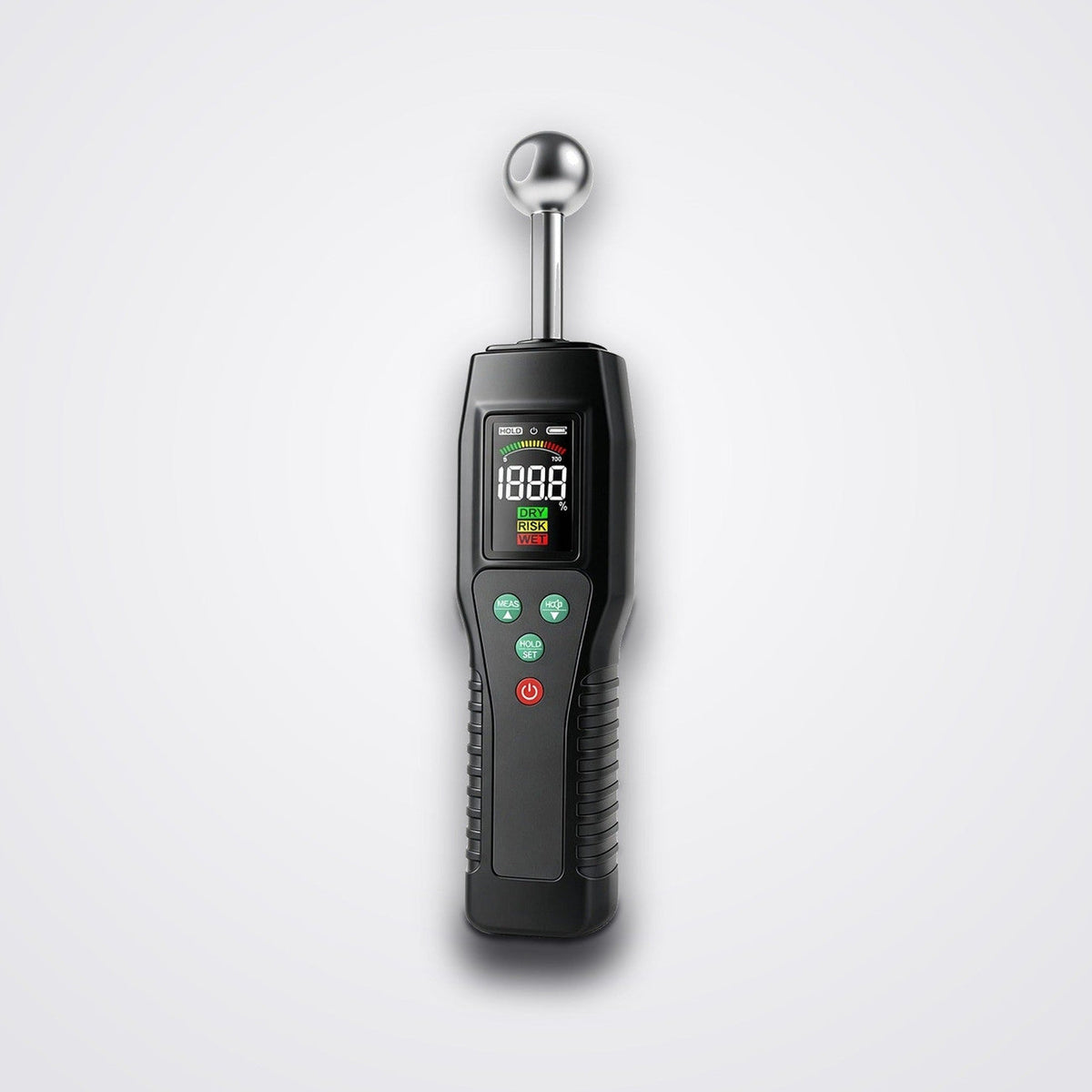
The QT700I is a pinless moisture meter for walls, plaster and timber. Its published description specifies a relative 0–100 scale, rather than percentage moisture content. A reading of 60 therefore does not mean that a wall contains 60% water.
Use that scale to build a comparison map on suitable, comparable material. The pattern can guide further investigation, but the number alone does not identify the source of damp.
The three scene illustrations below were AI-generated using product reference images. They explain the workflow and are not records of our own inspections or measured results.

Choose a comparison area carefully
Identify the construction and surface finish as far as practical. Compare like areas with like areas: a plasterboard section, a solid wall and a metal-backed feature may respond differently for reasons other than water. Do not assume the lowest nearby reading proves a genuinely dry reference.
Mark a grid or a series of named positions on a photograph. Follow the exact-model instructions for contact, orientation and clearance from edges or other influencing features. Keep pressure and placement consistent, and note where the surface is uneven or unsuitable.
For a plaster-wall comparison, keep the surface finish and construction as similar as possible between points. Small removable position markers can help you return to the same area; keep the actual sensor contact on a suitable unobstructed surface. Call a point a comparison position until other evidence supports treating it as a dry reference.

The listing describes sensing 5–40mm below the surface. Treat that as a stated instrument capability with conditions to verify, not a promise of finding every hidden wet layer or measuring a precisely bounded depth through every wall construction.
Preserve the spatial pattern
Record the relative value at each named point, along with the date, room conditions and material notes. A broad band, isolated spot and low-level uniform pattern are different observations. Do not reduce the whole wall to its maximum reading and lose the map.
If you revisit, use the same positions and method. A new coat of paint, changed temperature, different surface contact or a different construction zone can complicate a before-and-after comparison.

Keep location notes with the observations rather than relying on memory. The useful record is the relationship between the position, comparable material and relative indication, so that a later check can follow the same method.
Use the map to choose the next check
Pinless damp discussions often distinguish relative readings from actual moisture percentages. That distinction helps prevent a screening result becoming a diagnosis of rising damp, a leak or a need for a particular treatment without supporting investigation.
Consider other evidence appropriate to the building: visible defects, plumbing history, ventilation conditions, construction and a suitable independent moisture-assessment method. A conductive or metal feature may affect an electrical moisture indication. Conversely, a low surface indication does not prove every concealed layer is dry.
The QT700I's benefit is that you can compare suitable areas without making pin holes. Keep the result at that level of certainty. An annotated map with repeatable positions is useful evidence for a survey or repair discussion; an unexplained percentage sign added to its 0–100 scale is not.
For the current specification and supplied version, see the QT700I product page.
For the related product overview, see the QT700I Moisture Meter Learn More page.