
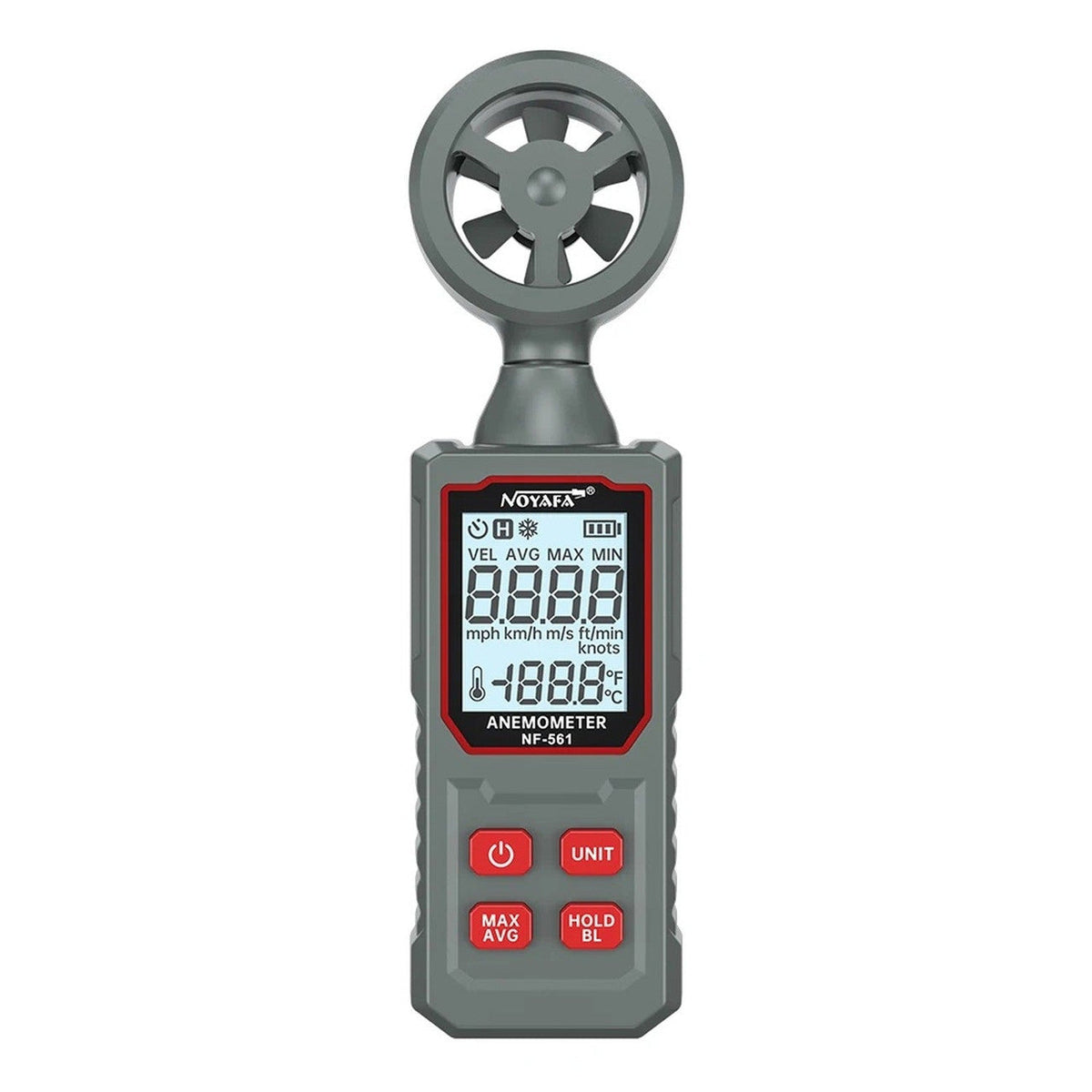
A NOYAFA NF-561 wind-speed average and a maximum describe different parts of an observation. An average can help summarise a changing airstream; a maximum highlights the largest value captured under the instrument's recording method. Neither is meaningful without the observation window and setup.
For a garden wind check or a ventilation comparison, decide which result you need before pressing MAX/AVG. Then keep the instrument position consistent long enough to make the comparison useful.

NOYAFA NF-561 supplier product photograph. Displayed values are illustrative.
Give a gust a fair observation window
Choose a location with the exposure relevant to your question. A reading behind a fence describes that sheltered spot, not an unobstructed weather station. Record height, nearby obstacles and the vane direction.
Follow the NF-561 instructions for selecting, resetting and reading the maximum or average. Use the same observation duration when comparing two positions. A maximum collected over a longer window has had more opportunity to encounter a gust.
Do not sweep the vane around while calling the result a fixed-position average. If you want to investigate how a barrier changes the wind, define the two positions and repeat the same method at each, recognising that the outdoor wind can change between visits.

Supplier airflow application artwork. A local speed reading is not automatically a total flow measurement.
Anemometer unit of measurement: velocity comes first
The NF-561 is a vane anemometer with wind-speed and temperature readouts and UNIT, MAX/AVG and HOLD controls. Select a speed unit appropriate to the record, then write it with every number.
Metres per second and miles per hour are velocity units. CFM is a volume-flow unit. A speed reading at one point does not automatically give the total airflow through a vent.
At a grille, velocity can vary sharply across the opening, and the vane may obstruct part of the flow. Estimating volume requires a suitable effective area and sampling method. If your job needs direct volume-flow calculations or formal ventilation balancing, verify the required functions and method before choosing a compact speed meter.

Conceptual changing signal • not NF-561 measurements
HOLD is a reading aid
HOLD can make a difficult-to-view reading easier to copy. Once held, the displayed value no longer describes subsequent changes in the airstream. Release it before starting the next observation, and label a held spot value separately from an average.
The temperature readout also needs time to respond after a location change. A meter carried from a warm pocket into cool outdoor air should not be assumed to give an immediate settled air temperature.
Distinguish a repeat check from calibration
You can check that the vane moves freely and that repeated observations under stable conditions are plausible. Anemometer calibration is a separate process involving an appropriate reference and documented uncertainty. Comparing two handheld meters casually does not establish traceable accuracy.
Choose the NF-561 for compact wind-speed observations when its verified specification suits the expected conditions. Keep location, units and time window with the result. That turns “it was gusty” into a record another person can understand without inventing a full weather or duct-flow assessment.
For the current specification and supplied version, see the NOYAFA NF-561 product page.
Explore the NOYAFA NF-561
See its functions, suitable tasks and key limits before choosing.