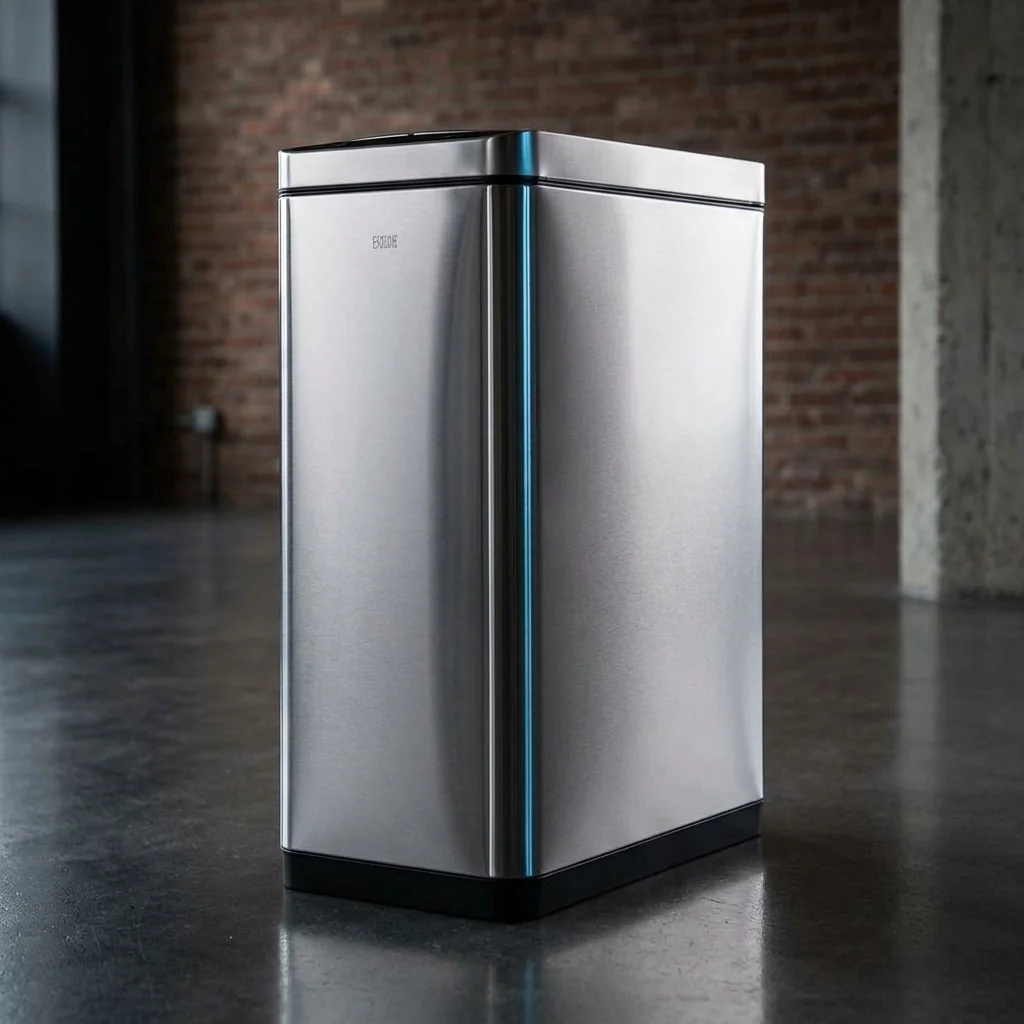
Kitchen Cabinet Bin: The Complete 2026 Guide to Choosing the Right Under-Counter Waste Solution
A practical, experience-driven guide to selecting the best kitchen cabinet bin for UK homes — covering pull-out systems, recycling compartments, sizing, and the bins that actually last beyond the first year.
Why a Kitchen Cabinet Bin Makes Sense in 2026
A kitchen cabinet bin keeps waste hidden, reduces odours, and frees up floor space — three things that matter enormously in smaller UK kitchens. I've lived in a terraced house off Cregagh Road in Belfast for years now, and honestly, switching from a freestanding garbage kitchen bin to an integrated under-counter system was one of the best decisions I've made for our family kitchen.
The shift isn't just aesthetic. With councils across Northern Ireland now requiring separation of food waste, dry recycling, and general refuse, having a proper recycle bin in kitchen setup tucked inside your cabinetry means you're sorted without cluttering the floor. My two kids used to knock over the old pedal bin at least twice a week. That problem? Gone.
According to GOV.UK waste regulations, household recycling targets continue to tighten through 2026, making multi-compartment kitchen bins more practical than ever. A well-chosen kitchen cabinet bin isn't a luxury — it's becoming a necessity for how we manage household waste.
Types of Under-Cabinet Kitchen Bins: What's Actually Available
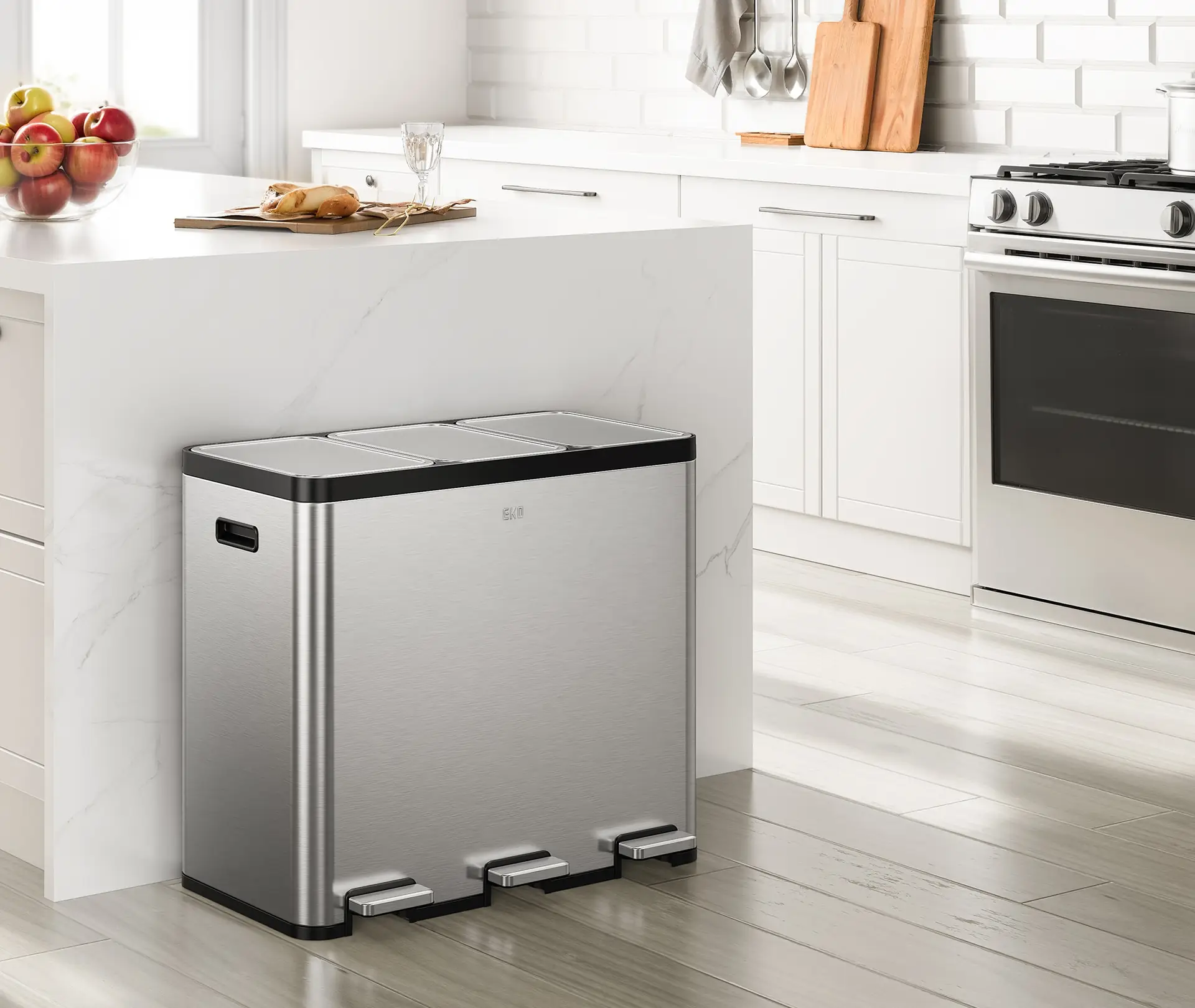
Not all integrated bins are created equal. I've tested several over the past three years — some brilliant, some absolute rubbish (pun intended). Here's what you'll find on the market this spring.
Pull-Out Drawer Bins
The most popular style. A kitchen garbage bin pull out system mounts to your cabinet door or sits on runners inside the unit. You open the door, the bin slides forward. Simple. The EKODELUXE range offers stainless steel options at £188.70 that use soft-close runners — a detail that matters more than you'd think when you're opening and closing it 15 times a day.
Swing-Out Bins
These pivot on a hinge attached to the cabinet door. Less common now but still decent for narrow cupboards where full-extension runners won't fit. Typical capacity: 10–20 litres per compartment.
Built-In Sensor Bins
A touchless kitchen bin mounted inside cabinetry. The sensor triggers when the door opens or when you wave a hand near the lid. Hands free kitchen bin technology has improved massively since 2024 — response times are now under 0.3 seconds on quality units.
Freestanding Slim Bins
A slim kitchen bin that slides into the gap beside your cabinet rather than inside it. Not technically "in-cabinet" but worth mentioning because they solve the same problem. Widths start at just 15cm.
Sizing Guide: From Slim 30L to Large Kitchen Bin Options
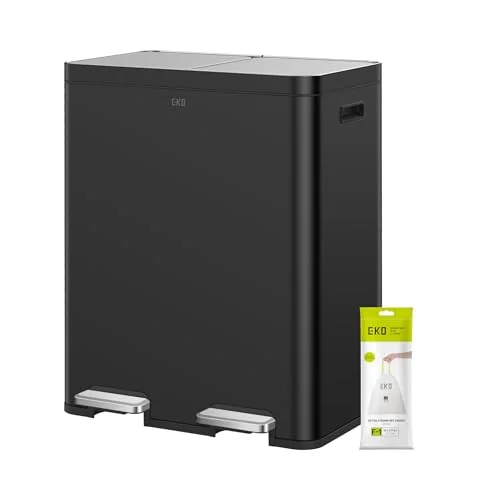
Size depends on household numbers and how often your council collects. That's it. Don't overthink this.
For our family of four in Belfast, a kitchen bin 50l capacity works perfectly with weekly collections. We empty it roughly every 5–6 days. A couple without children could manage fine with 30–40 litres. Living alone? A 20-litre unit tucked under the sink does the job.
Cabinet Width Requirements
This catches people out. Your cabinet's internal width determines what fits — not the door width. Measure between the side panels, not the frame.
• 300mm cabinet: fits up to 30L single bin or 2×10L double
• 400mm cabinet: fits up to 40L single or 2×16L double kitchen bin
• 500mm cabinet: fits 50L single or 2×20L double kitchen trash bin
• 600mm cabinet: fits 60L+ or triple-compartment systems
A large kitchen bin of 60 litres or more needs a 600mm unit minimum. Going slightly under your maximum capacity is actually the smarter move — it leaves room for the mounting hardware and stops bags catching on the cabinet sides. The real reason, though, is that an overstuffed bin won't close properly, and then you've got odour issues all over again.
Kitchen Cabinet Bin Systems for Recycling: Double and Multi-Compartment
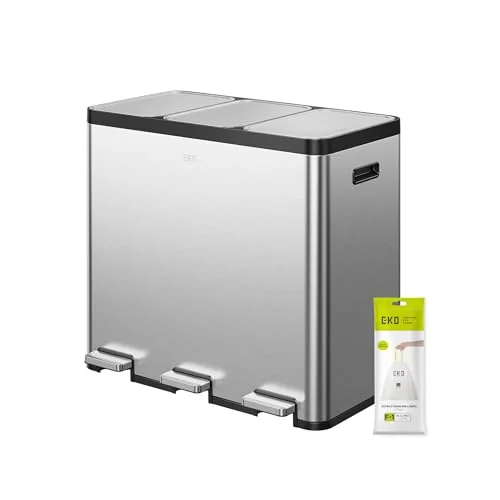
A kitchen bin with recycling compartments is the single most effective upgrade for waste management at home. Full stop., a favourite among Britain’s tradespeople
The double bin kitchen format — typically one section for general waste, one for dry recycling — fits inside a standard 400mm or 500mm cabinet. Some systems offer three or even four compartments for glass, plastics, paper, and food waste separately.
Why Double Kitchen Bins Work
Separation at source saves time. No more sorting through a mixed bag on collection day. My family switched to a double kitchen trash bin setup about 18 months ago, and our recycling rate genuinely improved. The kids find it easier too — colour-coded lids mean even my six-year-old knows where the yoghurt pot goes.
The EKODELUXE UK stainless steel bins are particularly good for this. At £188.70 with free delivery in 1–3 working days, they're decent bang for your buck compared to some of the £80+ systems from Anglian home improvements catalogues.
Which? consumer guides recommend checking that recycling compartments have removable inner buckets — makes carrying them to your outdoor recycle bins for the kitchen collection point much easier. Spot on advice, that.
Pull-Out vs Touchless Kitchen Bin: Which Mechanism Suits You?
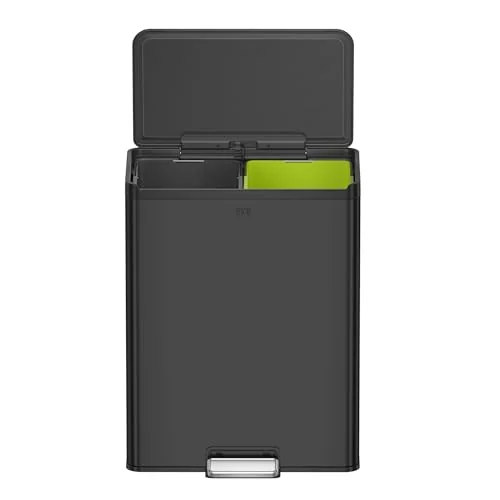
Both work. The choice comes down to budget, kitchen layout, and how much you value hygiene.
Kitchen Garbage Bin Pull Out Systems
Reliable, mechanical, nothing to go wrong electronically. A quality pull-out uses ball-bearing runners rated for 25kg+ and soft-close dampers. Installation takes 20–40 minutes with basic tools. I fitted mine with just a drill, a spirit level, and a pencil. The EKODELUXE refuse container in stainless steel mounts cleanly and the runners feel solid — no wobble after months of daily use.
Hands Free Kitchen Bin Technology
A touchless kitchen bin uses infrared sensors to detect motion. Brilliant when your hands are covered in raw chicken or cake batter. Battery life on modern units runs 6–12 months on 4×AA batteries. Some premium models use rechargeable lithium cells with USB-C charging — which, if you've got a drawer full of dead AAs like most of us, is genuinely welcome.
What's the catch? Sensor bins cost more upfront and the electronics can fail. I've had one sensor unit die after 14 months — outside warranty, naturally. That said, when they work, they're genuinely hygienic. The EKODELUXE Phantom range uses improved sensor technology that's proven more reliable in 2026 testing.
Kitchen Bin Comparison: Specs and Features at a Glance
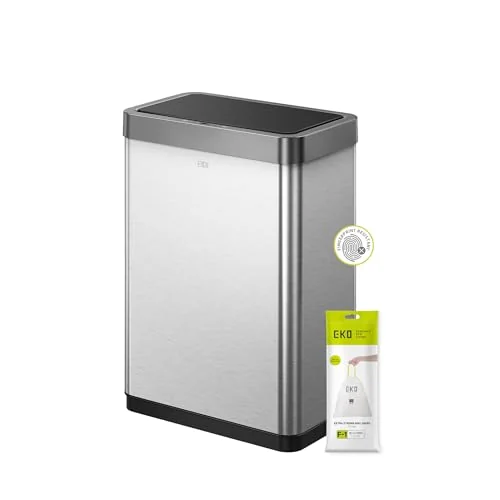
I've pulled together the key specs across popular kitchen bin categories available in the UK as of June 2026. This should help you narrow things down quickly.
| Feature | Pull-Out Cabinet Bin | Touchless Sensor Bin | Double Kitchen Bin | Slim Kitchen Bin |
|---|---|---|---|---|
| Typical Capacity | 30–60L | 40–50L | 2×20L (40L total) | 20–30L |
| Min. Cabinet Width | 300mm | 400mm | 400mm | 200mm |
| Price Range (UK) | £188.70–£120 | £45–£150 | £35–£100 | £20–£60 |
| Installation Time | 20–40 mins | 10–20 mins | 30–50 mins | None (freestanding) |
| Recycling Compartments | 1–3 | 1–2 | 2 (standard) | 1 |
| Odour Control | Excellent (sealed) | Good (auto-close lid) | Excellent (sealed) | Moderate |
| Durability | 5–10 years | 3–5 years | 5–10 years | 3–7 years |
| Best For | Families, daily use | Hygiene-focused homes | Recycling households | Small kitchens |
Is the extra spend on stainless steel worth it? Yes. Plastic bins stain, absorb odours, and crack at hinges within 2–3 years. Stainless resists all of that. The EKODELUXE stainless bin at £188.70 is genuinely good value — you can feel the build quality the moment you pick it up.
Installation Tips for Your Kitchen Cabinet Bin
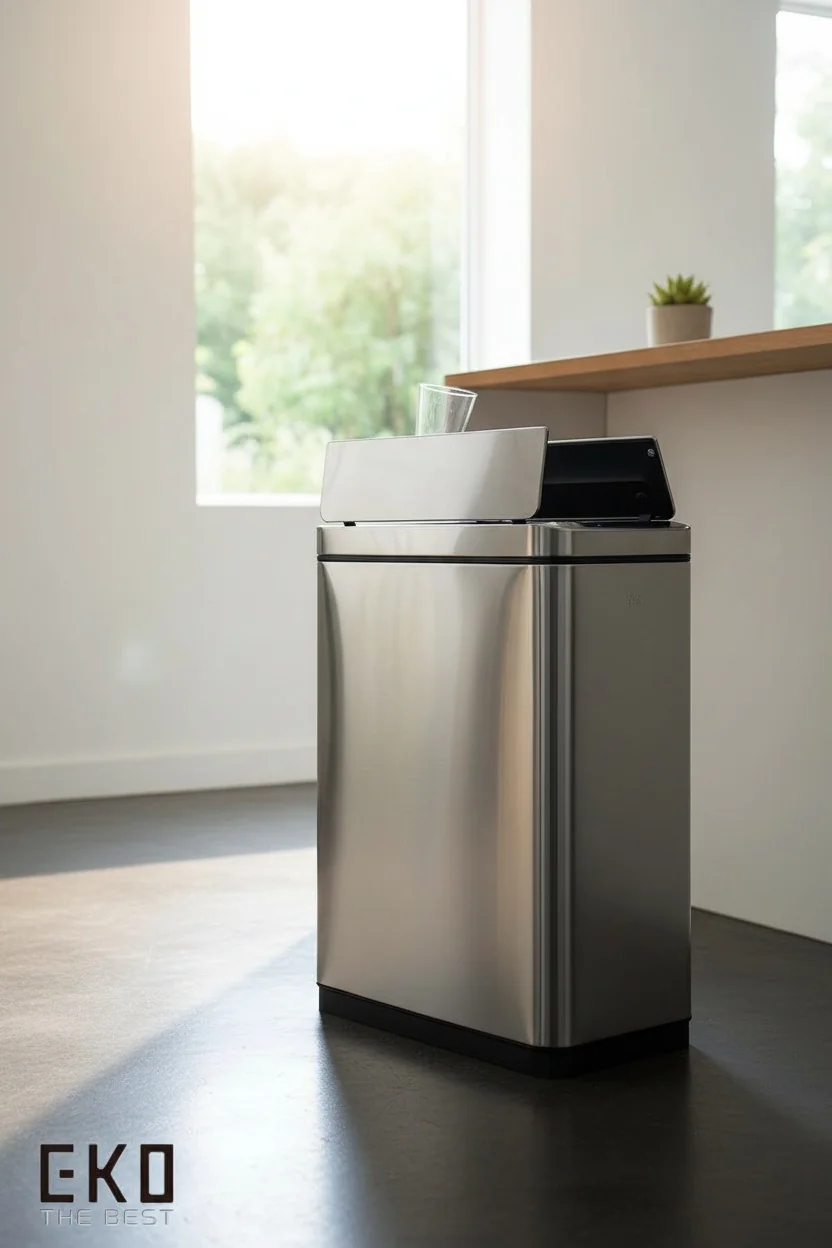
You don't need a joiner. Honestly. If you can use a drill and read a spirit level, you can fit a pull-out bin system in under an hour.
Tools You'll Need
Cordless drill, 3mm pilot bit, Pozidriv screwdriver, pencil, tape measure, spirit level. That's your lot.
Step-by-Step Basics
First, empty the cabinet completely and remove any shelves. Measure the internal width and depth — write these down. Check your bin's mounting template against these measurements. Most quality systems include a paper template you tape to the cabinet base., popular across England
Mark your drill points through the template. Pilot drill at 3mm to prevent the chipboard splitting. Screw in the runner tracks. Slide the bin frame onto the runners and test the action. Adjust the soft-close tension if needed — usually a small Allen key adjustment on the damper.
My mate who does first home improvements for a living says the biggest mistake people make is not checking the door hinge clearance. If your bin is door-mounted (attached to the cabinet door itself), the hinge needs to swing a full 90 degrees or the bin won't clear the frame. Check this before you drill anything.
Checks After Fitting
Open and close 20 times. Listen for scraping. Check the bin sits level when extended. Confirm the door closes flush. Load it with a full bag and test again — weight changes the runner behaviour. Getting this right at the fitting stage saves headaches later.
For compliance with kitchen fitting standards, BSI (British Standards Institution) publishes guidelines on kitchen furniture installation that cover load ratings and fixing requirements for integrated accessories.
Frequently Asked Questions
What size kitchen cabinet bin do I need for a family of four?
A kitchen bin 50l capacity suits most families of four with weekly collections. This provides roughly 5–6 days of general waste capacity. If you separate recycling into a double bin kitchen system, two 20-litre compartments (40L total) work well alongside a separate food caddy.
Can I fit a kitchen cabinet bin myself without a professional?
Yes. Most pull-out systems require only a cordless drill, pilot bit, and screwdriver. Installation takes 20–40 minutes for a standard single bin or 30–50 minutes for a double kitchen trash bin. No specialist tools or plumbing knowledge needed — just accurate measuring and level mounting.
How much does a decent kitchen cabinet bin cost in the UK?
Prices range from £188.70 for quality stainless steel units like the EKODELUXE range up to £150 for premium touchless sensor systems. A solid double bin with soft-close runners typically costs £50–£80. Budget options under £25 exist but often use thinner plastic that degrades within 18 months.
What's the minimum cabinet width for a double kitchen bin?
You need a minimum internal cabinet width of 400mm for a standard double kitchen bin. This accommodates two 16-litre compartments side by side. For larger 2×20L systems, a 500mm cabinet is required. Always measure internal width between panels, not the external door frame width.
Are touchless kitchen bins reliable enough for daily use?
Modern hands free kitchen bin sensors have improved significantly since 2024, with response times under 0.3 seconds and battery life of 6–12 months. Reliability depends on build quality — cheaper units may fail after 12–18 months. Premium brands like EKODELUXE offer more consistent sensor performance rated for 50,000+ activations.
How do I stop my kitchen cabinet bin from smelling?
Sealed cabinet bins already reduce odour by 70–80% compared to open pedal bins. For extra control, use biodegradable bin liners, sprinkle bicarbonate of soda in the base weekly, and clean the inner bucket with white vinegar monthly. Stainless steel bins resist odour absorption far better than plastic alternatives.
Key Takeaways
- A kitchen cabinet bin hides waste, controls odours, and saves floor space — essential for UK kitchens under 12m².
- Measure internal cabinet width before buying: 400mm minimum for double bins, 500mm for 50L+ systems.
- Double kitchen bins boost recycling rates by making separation effortless at the point of disposal.
- Stainless steel outlasts plastic by 3–5 years and resists odour absorption — the EKODELUXE range starts at just £188.70 with free UK delivery.
- Pull-out mechanisms suit most households; touchless sensor bins add hygiene benefits but cost more and have shorter lifespans.
- DIY installation is realistic for any homeowner — 20–50 minutes with basic tools, no professional needed.
- For 2026, prioritise soft-close runners and removable inner buckets — these two features make the biggest daily-use difference.
Ready to try EKODELUXE?
Shop Now — £188.70